


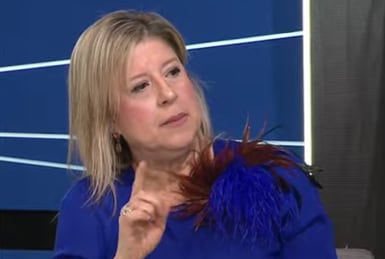
Argentina Security Minister defends probe into Agostina Vega case, clarifies alert protocols
Translated from Spanish, summarized and contextualized by DistantNews.
At a glance
News
Named sources
Under investigation
- Argentina's National Security Minister Alejandra Monteoliva defended the investigation into the Agostina Vega case.
- She clarified that the "Alerta Sofía" (Sofia Alert) was not delayed and explained the protocol for issuing such alerts.
- Monteoliva also addressed criticism regarding the classification of the case as "homicide" instead of "femicide."
National Security Minister Alejandra Monteoliva defended the investigation into the Agostina Vega case, asserting that the "Alerta Sofía" (Sofia Alert) protocol was not delayed. Speaking on LN+, Monteoliva explained that the issuance of such alerts is a "joint decision" involving the prosecutor, judge, and authorities.
Monteoliva elaborated on the complexities of child search protocols, emphasizing that premature issuance of an Alerta Sofía can be counterproductive. She cited the risk of endangering the child's life, particularly in cases potentially involving human trafficking, stating, "For example, if it is a situation of trafficking, there is a risk that the person's life will be taken."
Addressing criticism about referring to Agostina Vega's case as "homicide" rather than "femicide," Monteoliva clarified the distinction. "Not all homicides of women are femicides," she stated, explaining that the classification depends on whether the victim's gender was the primary motive for the crime.
Monteoliva defended the progress of the investigation, highlighting that the prosecutor has followed all necessary steps. She noted the existence of a body, an ongoing investigation, identified detained suspects, and a working hypothesis. "It would be serious if that did not exist," she concluded, underscoring the active nature of the inquiry.
DistantNews Editorial
Originally published by La Nación in Spanish. Translated, summarized, and contextualized by our editorial team with added local perspective. Read our editorial standards.
More Stories



From Our Blog

What Gets Lost (and Found) When News Is Translated

The Critical Role of Diaspora Media in Global News

What Travellers Should Know About Countries with Restricted Press

A Digital Nomad's Guide to Following Local News

How the Same Story Looks Different in Different Countries
