


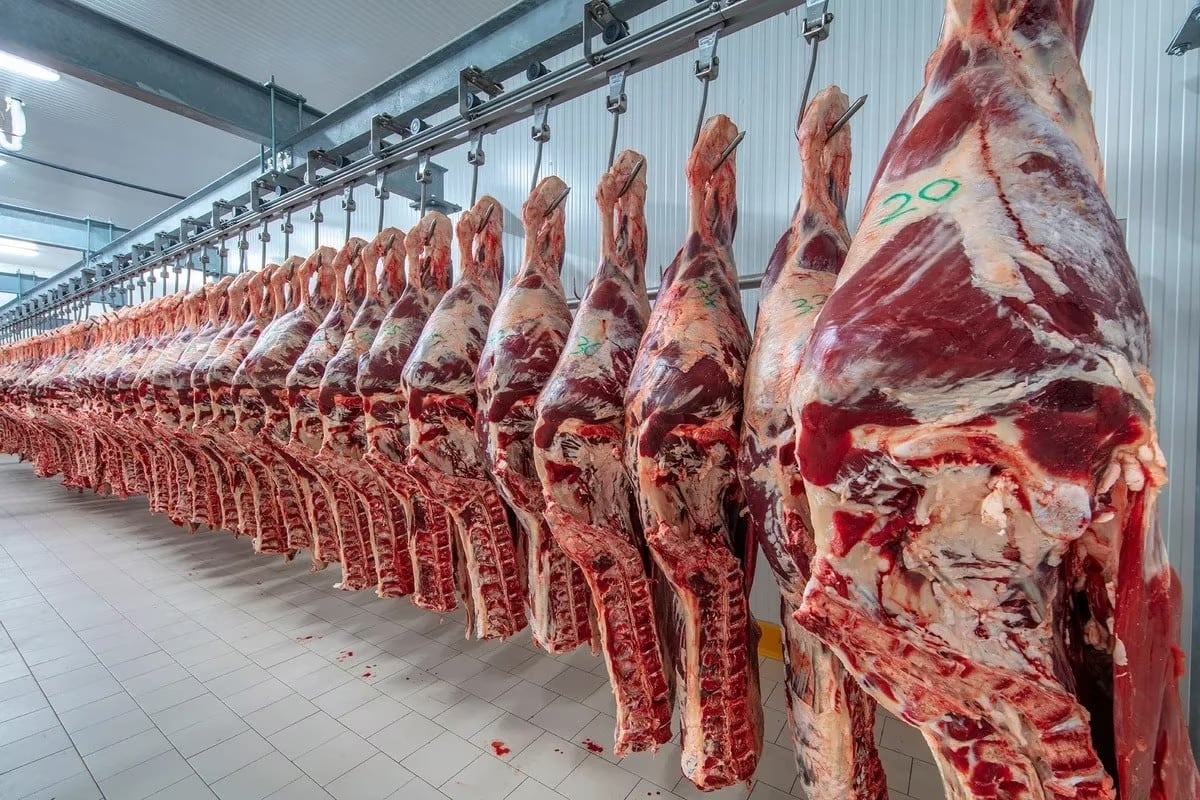
Argentine beef industry hits decade low as slaughter falls 9.8%
Translated from Spanish, summarized and contextualized by DistantNews.
At a glance
News
Documents & data
Context piece
- Argentina's beef processing industry activity has fallen to its lowest level in a decade, with cattle slaughter down 9.8% in the first five months of 2026 compared to the same period in 2025.
- Beef production also decreased by 7.3%, totaling 1.168 million tons.
- The decline is attributed to a prolonged period of liquidating breeding stock due to adverse climate events and reduced purchasing power affecting domestic consumption.
Argentina's beef processing sector is experiencing its most significant downturn in ten years, with cattle slaughter numbers plummeting. Between January and May 2026, 4.94 million head of cattle were processed, a 9.8% drop from the previous year. This marks the lowest activity level for the sector in a decade, according to a report by the Chamber of the Meat Industry and Commerce of the Argentine Republic (Ciccra).
The reduced availability of cattle for slaughter is a direct consequence of years of stock liquidation, exacerbated by adverse climate events since 2022. This has led to a significant decrease in beef production, which fell by 7.3% to 1.168 million tons (with bone equivalent) in the first five months of 2026 compared to the same period in 2025. In absolute terms, production decreased by 91,650 tons.
May 2026 saw a year-on-year drop of 7.3% in slaughter, with 127,600 fewer head processed than in May 2025. Ciccra noted that the proportion of females in the slaughter mix continues to decline, approaching levels compatible with maintaining the national herd.
Domestically, consumers are grappling with the impact of higher relative meat prices. Despite a moderation in consumer prices observed in May, overall consumption remains weak. Ciccra reported an 11.1% annual contraction in apparent beef consumption, attributed to the declining purchasing power of Argentine families.
DistantNews Editorial
Originally published by La Nación in Spanish. Translated, summarized, and contextualized by our editorial team with added local perspective. Read our editorial standards.
More Stories



From Our Blog

What Gets Lost (and Found) When News Is Translated

The Critical Role of Diaspora Media in Global News

What Travellers Should Know About Countries with Restricted Press

A Digital Nomad's Guide to Following Local News

How the Same Story Looks Different in Different Countries
