

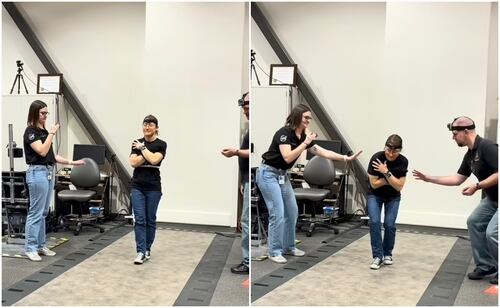
Artemis II: Christina Koch shows how her body adapts to gravity; video highlights difficulty standing
Translated from Spanish, summarized and contextualized by DistantNews.
TLDR
- NASA astronaut Christina Koch shared a video detailing her body's adaptation to Earth's gravity after the Artemis II mission.
- The video illustrated physical therapy exercises Koch underwent to regain motor control, highlighting the effects of microgravity on the vestibular system.
- Koch noted that understanding these adaptations could inform treatments for conditions like vertigo and other neurovestibular issues on Earth.
The Artemis II mission, which concluded on April 10th, pushed the boundaries of human space exploration, reaching a record distance of 406,778 kilometers from Earth. While the mission itself was a triumph, the post-flight experience of astronaut Christina Koch has captured significant attention. Her candid sharing of the physical challenges in readapting to Earth's gravity, particularly through a video demonstrating her balance therapy, offers a rare glimpse into the human cost of space travel.
Koch's explanation of how the body's vestibular system, crucial for orientation, malfunctions in microgravity and how the brain learns to ignore its signals is particularly insightful. This firsthand account underscores the complex physiological adjustments astronauts endure. Her observation that this knowledge can aid in treating terrestrial conditions like vertigo and concussions adds a layer of practical benefit to the scientific endeavor, showing how space exploration directly contributes to medical advancements.
When people live in microgravity, the systems in our body that have evolved to tell our brain how we move, the vestibular organs, don't function correctly. Our brain learns to ignore those signals and so, when we return to gravity for the first time, we rely heavily on our eyes to orient ourselves visually.
From Mexico's perspective, as covered by El Universal, this story highlights not just the scientific achievements of space missions but also the profound human element involved. While international media often focuses on the technological feats, local coverage emphasizes the personal journey and the tangible benefits for life on Earth. Koch's experience serves as a powerful reminder that pushing the frontiers of space exploration requires significant personal sacrifice and resilience, offering valuable lessons for health and medicine.
Learning about this can help inform how we treat vertigo, concussions, and other neurovestibular conditions on Earth.
DistantNews Editorial
Originally published by El Universal in Spanish. Translated, summarized, and contextualized by our editorial team with added local perspective. Read our editorial standards.
More Stories
From Our Blog

What Press Freedom Means for the News You Read

What Gets Lost (and Found) When News Is Translated

The Critical Role of Diaspora Media in Global News

What Travellers Should Know About Countries with Restricted Press

A Digital Nomad's Guide to Following Local News
