


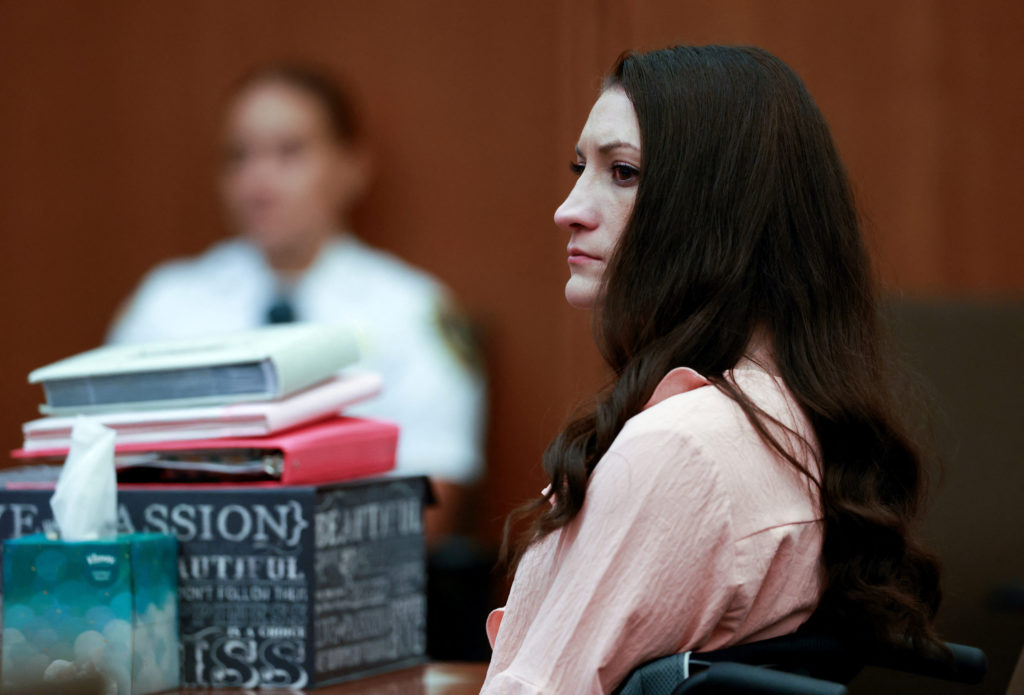
As the Lindsay Clancy case highlights postpartum psychosis, a mom stricken by it shares her story of hope
Summarized and contextualized by DistantNews.
At a glance
In-depth
Named sources
Context piece
- Bridget María Chesterton shares her experience with postpartum psychosis, a severe mental health disorder.
- The condition has gained public attention due to the Lindsay Clancy case, where postpartum psychosis is a key question.
- Chesterton aims to raise awareness and dispel misconceptions, emphasizing that recovery and hope are possible with treatment and support.
Bridget María Chesterton is speaking out about her experience with postpartum psychosis, a severe mental health disorder that has recently come under intense public scrutiny due to the case of Lindsay Clancy, a Massachusetts woman accused of killing her three children. The central question in Clancy's trial is whether postpartum psychosis drove her actions.
Researchers estimate that postpartum psychosis affects 1 to 2 out of every 1,000 women after childbirth. While most women with the condition do not harm their children, severe cases can lead to self-harm or harm to their children. Chesterton credits medication and strong family support for her own recovery, stating that her situation "could have gone sideways" without them.
It's something that we do not talk about as a society. I'm not embarrassed about what happened. I want people to know about it.
Chesterton, a 52-year-old history professor from upstate New York, is determined to combat the stigma and misinformation surrounding postpartum psychosis. She rejects online comments that question the legitimacy of the disorder and plans to publish a poem about her experience. "It's something that we do not talk about as a society," Chesterton said. "I'm not embarrassed about what happened. I want people to know about it."
Her own journey involved a difficult pregnancy and early delivery of her daughter in January 2019. After returning home, Chesterton initially seemed fine. However, her husband found her on the bathroom floor days later, disoriented and making nonsensical statements. Medical professionals diagnosed her with postpartum psychosis. She wants others to know that there is hope and that the condition is treatable.
could have gone sideways
DistantNews Editorial
Originally published by PBS NewsHour. Summarized and contextualized by our editorial team with added local perspective. Read our editorial standards.
More Stories


From Our Blog

How the Same Story Looks Different in Different Countries

What Gets Lost (and Found) When News Is Translated

The Critical Role of Diaspora Media in Global News

What Travellers Should Know About Countries with Restricted Press

A Digital Nomad's Guide to Following Local News
