


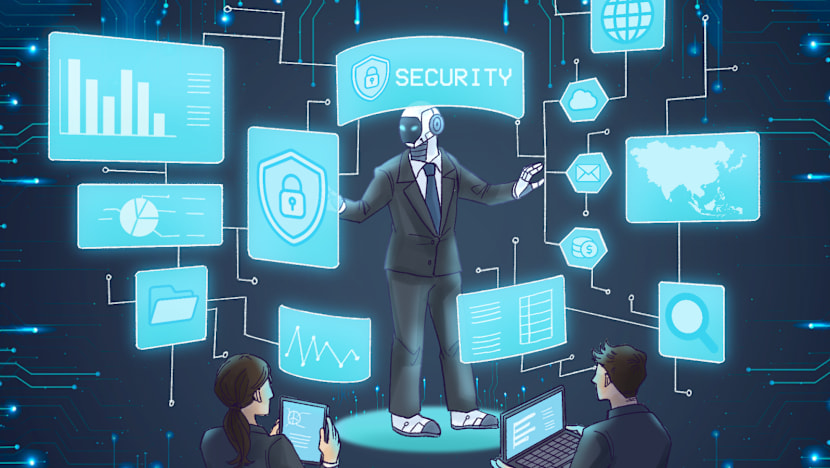
Asia races to adopt AI agents, facing clear rewards and security risks
Translated from English, summarized and contextualized by DistantNews.
At a glance
News
Sources not specified
Context piece
- Asia is rapidly adopting AI agents, with nearly half of Asia-Pacific enterprises planning significant investment in the next year.
- AI agents, designed for autonomous task execution, pose new cybersecurity risks as they gain access to sensitive systems.
- Experts warn that while AI agents offer competitive advantages, businesses must implement safeguards to mitigate risks of misuse and manipulation.
Asia is leading the global charge in adopting artificial intelligence (AI) agents, systems capable of autonomously carrying out assigned tasks. This rapid embrace, however, introduces significant cybersecurity risks alongside the potential rewards. Companies across the region are investing heavily, with nearly half of Asia-Pacific enterprises planning to spend at least US$1 million on AI agents in the coming 12 months, according to a report by cybersecurity firm Commvault.
These AI agents function as digital workers, able to read emails, write code, access databases, and communicate with other software tools. IBM's Bob is an example of such an enterprise agentic AI software platform. The adoption rate is staggering; a Deloitte report indicated that 29% of Asia-Pacific consumer businesses have already implemented agentic AI, a figure projected to climb to 72% within two years. This surge in adoption is a dramatic increase from the previous year, when only 12% of respondents allocated similar budgets to generative AI chatbots.
However, the very capabilities that make AI agents powerful also create new vulnerabilities. Researchers have documented the first case of an AI agent carrying out a ransomware-style cyberattack without human oversight, highlighting the potential for these tools to be weaponized by malicious actors. Cybersecurity experts emphasize that a key challenge lies in the extensive access these agents often require to enterprise systems. This access, if not properly secured, could be manipulated or misused, leading to data breaches or other cyber incidents.
Despite the risks, avoiding AI agents is not a viable option for businesses aiming to remain competitive in an increasingly AI-driven economy. The challenge, therefore, is to find a balance: harnessing the transformative capabilities of AI agents while simultaneously establishing robust safeguards. This involves careful management of the access granted to these tools and implementing comprehensive security measures to prevent their exploitation.
DistantNews Editorial
Originally published by CNA in English. Translated, summarized, and contextualized by our editorial team with added local perspective. Read our editorial standards.
More Stories



From Our Blog

What Gets Lost (and Found) When News Is Translated

The Critical Role of Diaspora Media in Global News

What Travellers Should Know About Countries with Restricted Press

A Digital Nomad's Guide to Following Local News

How the Same Story Looks Different in Different Countries
