


Asian stocks stutter after rout, Fed leaves markets guessing on rates
Translated from English, summarized and contextualized by DistantNews.
At a glance
News
Sources not specified
Context piece
- Asian stocks fluctuated amid market turbulence driven by AI concerns and uncertainty over the US Federal Reserve's interest rate path.
- Brent crude oil prices dipped below $90 per barrel as Middle East tensions eased slightly despite ongoing strikes.
- Investors are closely watching US monetary policy, the rising Treasury yield curve, Middle East conflicts, and the semiconductor and AI sectors for near-term market volatility.
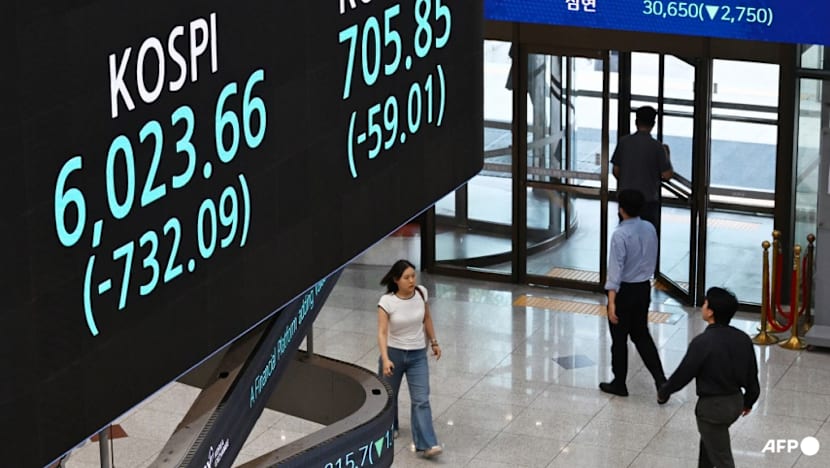
Asian markets experienced choppy trading on Thursday, struggling for direction after a turbulent week. Artificial intelligence jitters and uncertainty surrounding the US Federal Reserve's next move on interest rates weighed on investor sentiment. Brent crude futures fell below $90 a barrel, a day after a significant jump fueled by Middle East conflict escalation. The Federal Reserve held interest rates steady, but a divided decision left markets guessing about future hikes aimed at combating inflation. Yields on longer-dated US Treasuries climbed to 19-year highs, adding to market unease. Asian chipmakers have been at the center of recent market volatility, with a sharp sell-off in South Korean equities erasing trillions in market value and raising concerns about the returns on substantial AI investments. "Uncertainty about US monetary policy, the sharp steepening of the Treasury yield curve, growing tensions in the Middle East and continued worries about the semiconductor industry and AI sector mean that markets are likely to stay volatile in the near term," said Vasu Menon, managing director of investment strategy at OCBC. The KOSPI in South Korea was down 0.6 percent, heading for a 15 percent weekly slump. The downturn prompted Finance Minister Koo Yun-cheol to apologize for the rollout of single-stock leveraged ETFs and led authorities to announce market-stabilization measures. "Given that the fundamental thesis remains intact, there does appear to be an irrational, panic-like element to the current selling," said Gina Kim, portfolio manager for emerging market equities at Nordea Asset Management in Singapore. Chipmaker Samsung Electronics reported a record second-quarter operating profit, jumping 19-fold, which provided some relief to investors. However, earnings reports from tech giants Meta and Microsoft highlighted contrasting fortunes in the race to build AI infrastructure. Microsoft reassured investors about its fiscal 2027 cash generation despite heavy spending, while Meta's stock declined after a significant drop in its second-quarter free cash flow.
Uncertainty about US monetary policy, the sharp steepening of the Treasury yield curve, growing tensions in the Middle East and continued worries about the semiconductor industry and AI sector mean that markets are likely to stay volatile in the near term.
DistantNews Editorial
Originally published by CNA in English. Translated, summarized, and contextualized by our editorial team with added local perspective. Read our editorial standards.
More Stories


From Our Blog

What Gets Lost (and Found) When News Is Translated

The Critical Role of Diaspora Media in Global News

What Travellers Should Know About Countries with Restricted Press

A Digital Nomad's Guide to Following Local News

How the Same Story Looks Different in Different Countries
