


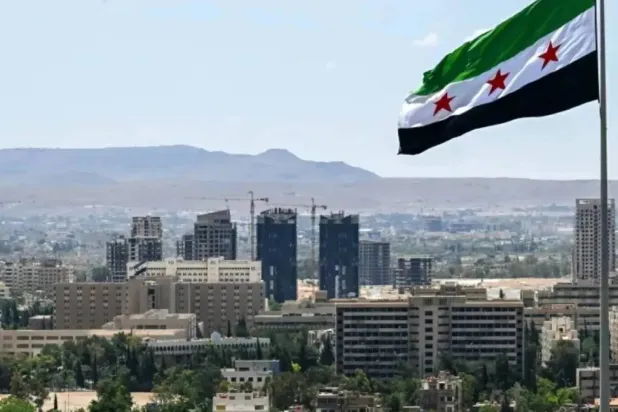

Assad-era Syrian reactor was configured for nuclear weapons, IAEA chief says
Translated from English and summarized by DistantNews. Read the original for the full story.
At a glance
News
Named sources
Ongoing story
- IAEA chief Rafael Grossi said a reactor built under Bashar Assad was configured efficiently to produce fissile material that could be used in nuclear weapons.
- Inspectors found about 73 tonnes of natural uranium metal at a previously undeclared Syrian site and placed the material under IAEA safeguards.
- Syria’s new government granted inspectors access to suspected former nuclear sites, while the future location of the uranium remains for Damascus to decide.
A reactor Syria was building during Bashar Assad’s rule had a configuration highly suited to producing fissile material for possible use in nuclear weapons, the head of the International Atomic Energy Agency said Monday.
IAEA Director General Rafael Grossi told reporters in Vienna that the reactor’s “configuration” and “technical features” were “very efficient in the production of fissile material that could be directly used for the fabrication of nuclear weapons.” He stressed that Syria never declared the project and consistently denied it. Intentions, he said, could not be judged, but the reactor represented a serious proliferation concern.
Very efficient in the production of fissile material that could be directly used for the fabrication of nuclear weapons
The agency has long believed that Syria operated an extensive undeclared nuclear program under Assad, including a reactor built by North Korea in eastern Deir Ezzor province. After Assad’s ouster, Syria’s new government agreed to give IAEA inspectors access to suspected former nuclear sites.
During an August visit, inspectors confirmed that exposed cooling infrastructure was consistent with a nuclear reactor. They also visited another previously undeclared site that Syria reported in a July 17 letter, inviting the agency to inspect and verify the location and any nuclear material that might be found there.
Of course, that was never declared, that was always denied, so, and again, intentions cannot be judged, but that was a very serious proliferation concern that we had, and this has been difficult work.
An IAEA confidential report circulated to member states said the site contained natural uranium metal in fuel rods with cladding. The agency verified about 73 tonnes of the material. Grossi said inspectors had to tear down walls and pass through difficult, narrow passages to reach it. Boxes were scattered throughout the site, he said, but the uranium is now under IAEA safeguards, and inspectors installed cameras there.
Asked whether the material would stay in Syria or be removed, Grossi said the Syrian government would decide. The agency’s priority, he said, was to know where it remained “until the last gram.” Logan Mintz of the Nuclear Threat Initiative said natural uranium metal cannot be used directly in a nuclear weapon, but could be diverted to a covert weapons program for further processing into plutonium.
Until the last gram
About this summary
Originally published by Asharq Al-Awsat in English. Translated, summarized, and contextualized automatically by DistantNews, with a note on how the source frames the story. Not individually reviewed before publishing. How this works.
More Stories
From Our Blog

News in Translation: What Gets Lost, and How We Keep the Framing

Diaspora Media: How Communities Follow News From Home

Traveling Where the Press Is Not Free: How to Read the News There

The Digital Nomad's Guide to Local News

The Same Story, Different Countries: How Coverage Changes at the Border
