


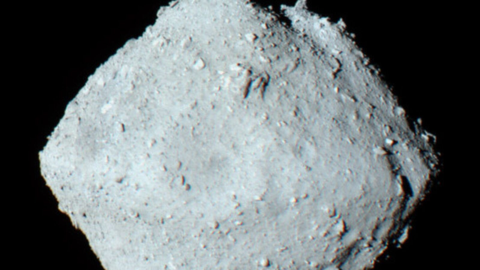
Asteroid Ryugu Carries Key Ingredients for Life, Study Finds
Translated from Estonian, summarized and contextualized by DistantNews.
At a glance
News
Sources not specified
Context piece
- A new study of samples from the Hayabusa2 asteroid mission reveals a rich variety of DNA and RNA building blocks on the asteroid Ryugu.
- This finding lends significant weight to the theory that life's essential components arrived on Earth via cosmic delivery.
- Researchers are examining the molecular composition and its implications for the early solar system, with a particular focus on ammonia's potential role.
The origins of life on Earth may have been seeded by cosmic messengers, according to a new study examining samples from the Japanese asteroid mission Hayabusa2. The research, published by Postimees, reveals that the asteroid Ryugu harbors a surprisingly diverse array of the fundamental building blocks for DNA and RNA.
This discovery provides substantial support for the hypothesis that life's essential components were delivered to our planet from space. Early Earth was a harsh environment, characterized by extreme heat, volcanic activity, and intense radiation. The presence of these crucial organic molecules on an asteroid suggests a potential pathway for life's emergence in such a hostile setting.
Astronomers are particularly interested in the specific molecular composition found on Ryugu and what it signifies about the early solar system. The study also explores the potential role of ammonia, a simple yet mysterious compound, in this complex process. Understanding these elements is key to piecing together the puzzle of how life began, both on Earth and potentially elsewhere in the universe.
DistantNews Editorial
Originally published by Postimees in Estonian. Translated, summarized, and contextualized by our editorial team with added local perspective. Read our editorial standards.
More Stories

/nginx/o/2026/06/06/17695959t1h9d55.jpg)
From Our Blog

What Gets Lost (and Found) When News Is Translated

The Critical Role of Diaspora Media in Global News

What Travellers Should Know About Countries with Restricted Press

A Digital Nomad's Guide to Following Local News

How the Same Story Looks Different in Different Countries
