


Astronomers discover two 'super-puffy' exoplanets lighter than cotton candy
Translated from Turkish, summarized and contextualized by DistantNews.
At a glance
News
Sources not specified
Context piece
- Astronomers discovered two massive exoplanets, TOI-791 b and TOI-791 c, located 1110 light-years away.
- These planets have a lower density than cotton candy, making them the largest known "super-puffy" exoplanets.
- Scientists believe these planets formed from gas and dust disks around young stars and may have lost mass over time.
An exciting discovery in astronomy has revealed two colossal exoplanets with densities lower than cotton candy. Located 1110 light-years away in the Volans constellation, these celestial bodies, designated TOI-791 b and TOI-791 c, have been identified as the largest "super-puffy" exoplanets known to date.
The discovery was made by astronomers from the University of Oxford and the University of Birmingham in the UK, in collaboration with the University of Nice Cote d'Azur in France. Utilizing data from NASA's Transiting Exoplanet Survey Satellite (TESS) and other telescopes, they analyzed the planets' densities. Researchers noted that Jupiter, by comparison, is 35 times denser than these newly found exoplanets.
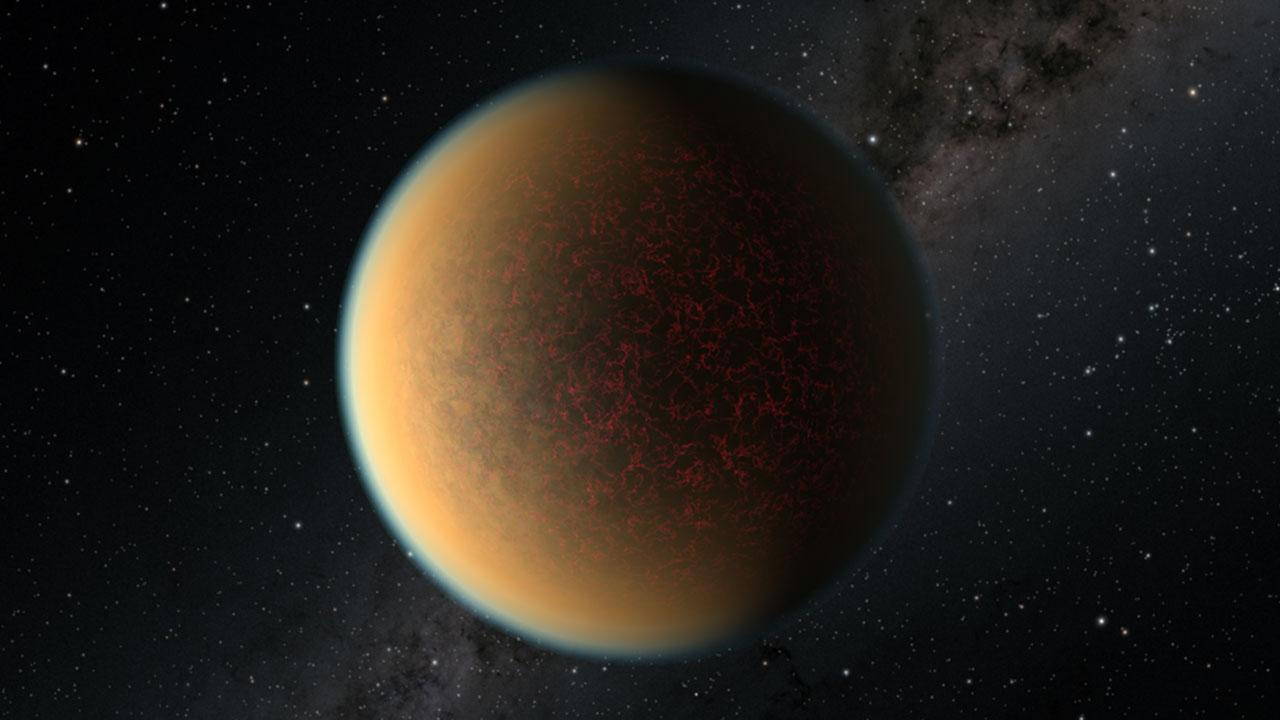
TOI-791 b and TOI-791 c are the largest exoplanets with a lower density than cotton candy.
George Dransfield, one of the study's authors, announced that these planets represent the lightest examples ever found for their size. He suggested that they might be predominantly composed of hydrogen and helium, possibly appearing white or blue. The "super-puffy" nature of these exoplanets, characterized by their extremely low density, is thought to stem from their formation within the gas and dust disks surrounding newly formed stars.
Scientists theorize that these planets may have shed significant amounts of their mass over time, leading to their current lightweight state. The chemical composition of TOI-791 b and TOI-791 c is expected to be further investigated using NASA's James Webb Space Telescope (JWST). The findings of this research have been published in the journal 'Monthly Notices of the Royal Astronomical Society.'
These planets are the lightest examples of their size.
DistantNews Editorial
Originally published by Cumhuriyet in Turkish. Translated, summarized, and contextualized by our editorial team with added local perspective. Read our editorial standards.
More Stories



From Our Blog

What Gets Lost (and Found) When News Is Translated

The Critical Role of Diaspora Media in Global News

What Travellers Should Know About Countries with Restricted Press

A Digital Nomad's Guide to Following Local News

How the Same Story Looks Different in Different Countries
