


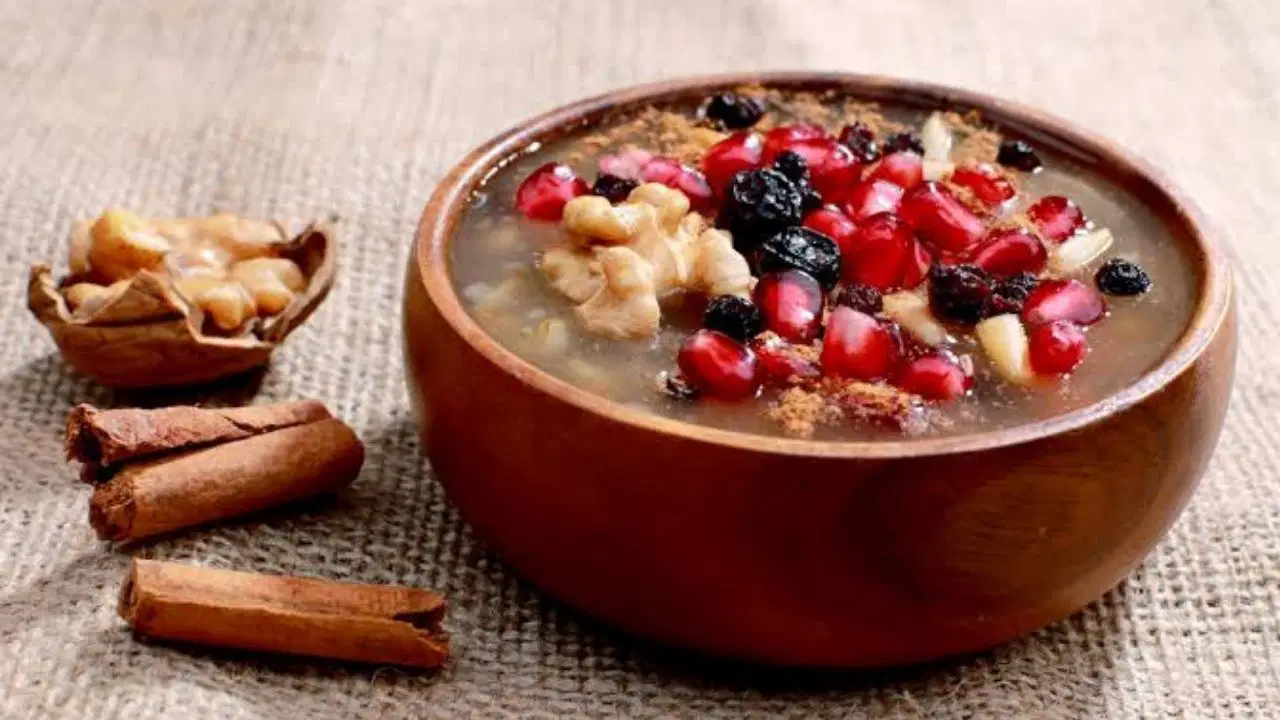
Aşure: A historic symbol of tradition and abundance
Translated from Turkish, summarized and contextualized by DistantNews.
At a glance
In-depth
Sources not specified
Context piece
- Aşure, a traditional dessert rooted in Middle Eastern and Anatolian culinary culture, symbolizes abundance and sharing.
- Its unique preparation involves combining wheat, chickpeas, dried fruits, and nuts without artificial binders, relying on the wheat's natural starch for a silky texture.
- The recipe emphasizes a clear, light creamy color and a consistency that doesn't become watery or jelly-like the next day, highlighting technical skill.
Aşure, a dessert steeped in the rich culinary traditions of the Middle East and Anatolia, stands as a profound symbol of abundance and the culture of sharing. Its name derives from the Arabic word 'aşara,' meaning 'ten,' hinting at its traditional preparation during the month of Muharram.
What distinguishes Aşure from other milk-based or starch-thickened desserts is its entirely plant-based composition. The dish achieves its signature silky and glossy texture not through artificial binders like rice or starch, but from the natural starches released by the carefully cooked wheat, chickpeas, dried fruits, and nuts. This meticulous process ensures a harmonious blend of flavors and a smooth consistency.
Achieving a truly authentic Aşure is considered a culinary feat. The ideal dessert should possess a clear, light, creamy-white hue. Furthermore, a hallmark of a well-made Aşure is its ability to maintain its consistency, neither becoming watery nor overly gelatinous, even when left until the following day. This recipe focuses on these traditional methods, using ingredients like wheat, chickpeas, dried apricots, figs, and raisins, enhanced with orange zest and spices like cinnamon and cloves.
DistantNews Editorial
Originally published by Cumhuriyet in Turkish. Translated, summarized, and contextualized by our editorial team with added local perspective. Read our editorial standards.
More Stories


From Our Blog

What Gets Lost (and Found) When News Is Translated

The Critical Role of Diaspora Media in Global News

What Travellers Should Know About Countries with Restricted Press

A Digital Nomad's Guide to Following Local News

How the Same Story Looks Different in Different Countries
