


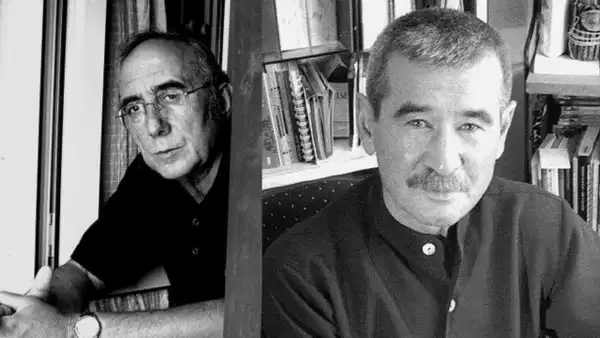
Ataol Behramoğlu bids farewell to Ahmet Telli: 'Wherever there is injustice...'
Translated from Turkish, summarized and contextualized by DistantNews.
At a glance
News
Named sources
Outcome reported
- Poet Ataol Behramoğlu paid tribute to the late Ahmet Telli, calling him one of the most distinguished poets of the 1960s generation.
- Behramoğlu highlighted Telli's realistic yet emotional style, comparing him to Nazım Hikmet and Ahmed Arif.
- He emphasized Telli's lifelong stance against injustice and his enduring appeal to future generations.
The literary world continues to mourn the passing of poet Ahmet Telli, with tributes pouring in from prominent figures. Among them, poet Ataol Behramoğlu fondly remembered Telli, hailing him as one of the most distinguished poets of the 1960s generation.
Behramoğlu described Telli's work as embodying the core characteristic of his generation: realism without abandoning emotion. He drew parallels to the esteemed poets Nazım Hikmet and Ahmed Arif, noting that Telli, like them, stood firmly against injustice wherever it appeared. "Wherever there is injustice, Ahmet Telli and his poetry are there to oppose it," Behramoğlu stated.
Ahmet Telli is among the most distinguished poets of our sixties poetry. The most distinct feature of this generation is to be realistic without rejecting emotionality. Just like Nazım Hikmet, just like Ahmed Arif's poetry. Wherever there is injustice, Ahmet Telli and his poetry are there to oppose it.
The tribute further praised Telli's gentle and wise voice, both in his poetry and in person. Behramoğlu also recognized Telli as a poet of love, predicting that his verses would continue to be cherished by younger generations, ensuring his work remains eternally youthful. "He is a poet who will be remembered, especially by the younger generations who will read him with love, and therefore will always remain young," Behramoğlu concluded.
His poetry has a wise and gentle voice, just like himself. He is also a poet of love. He is a poet who will be remembered, especially by the younger generations who will read him with love, and therefore will always remain young.
DistantNews Editorial
Originally published by Cumhuriyet in Turkish. Translated, summarized, and contextualized by our editorial team with added local perspective. Read our editorial standards.
More Stories



From Our Blog

What Gets Lost (and Found) When News Is Translated

The Critical Role of Diaspora Media in Global News

What Travellers Should Know About Countries with Restricted Press

A Digital Nomad's Guide to Following Local News

How the Same Story Looks Different in Different Countries
