


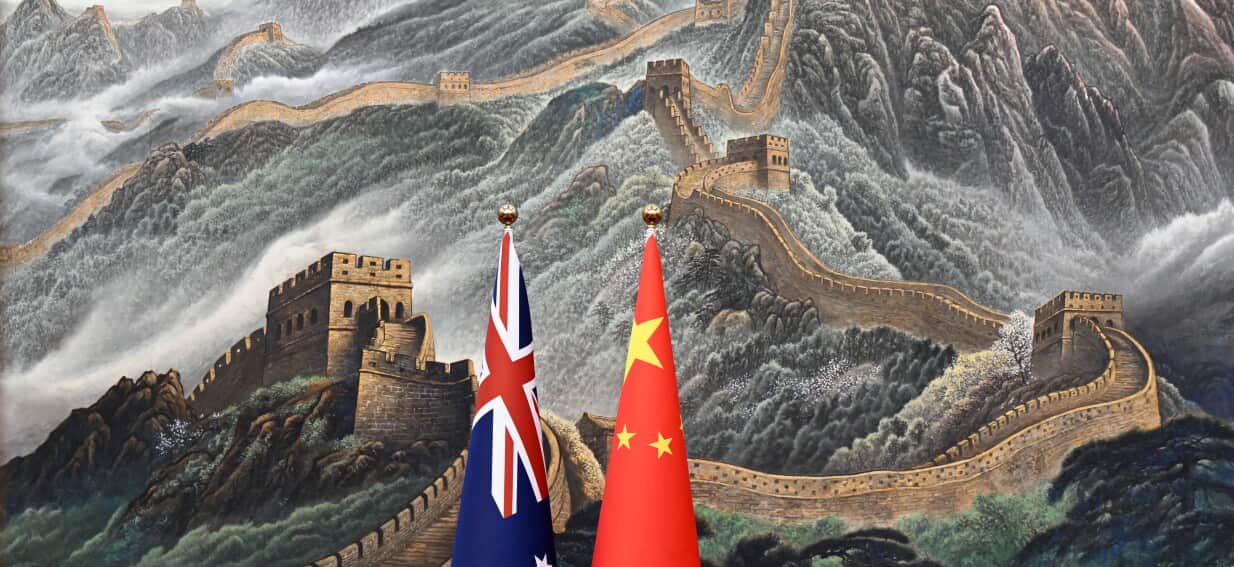
Australia-China ties unlikely to become close due to worldview gulf: ex-diplomat
Translated from English, summarized and contextualized by DistantNews.
At a glance
Analysis
Named sources
Context piece
- Australia's relationship with China is unlikely to become genuinely close due to diverging worldviews, according to former diplomat Graham Fletcher.
- Fletcher noted that while a "modest new normal" exists, events like Chinese military action in Taiwan could disrupt it.
- The relationship has seen improvements since the 2022 federal election, but past trade sanctions and military encounters remain significant factors.
Australia's relationship with China is unlikely to ever become genuinely close due to a fundamental mismatch in worldviews and national security agendas, according to Graham Fletcher, Australia's former top diplomat to China. He suggests that pursuing such a goal would be pointless, as both nations recognize the reality of their differing perspectives.
But this relationship is unlikely ever to become genuinely close, like the relaxed, intimate fellowship Australia enjoys with like-minded partners elsewhere in its region and beyond.
Fletcher, who served as ambassador from 2019 to 2023, noted that while a "modest new normal" has emerged in bilateral ties, potential disruptions loom. He specifically pointed to Chinese military actions, such as in Taiwan, as wildcards that could destabilize the current state of affairs. The relationship has been marred by intimidatory military encounters and significant trade sanctions, though efforts have been made to stabilize ties since the change in Australian government in 2022.
The gulf in terms of diverging world views and national security agendas is simply too wide.
China remains Australia's largest trading partner, with roughly a third of the nation's exports destined for China. While Beijing has gradually wound back trade sanctions worth $20 billion, Fletcher believes China still hopes to draw Australia closer into its orbit. Australia, conversely, is more focused on consolidating its current relationship, which Fletcher describes as unlikely to achieve the "relaxed, intimate fellowship" seen with like-minded partners.
An upheaval or conflict is always a possibility, though not in my opinion a strong one at present.
The former diplomat emphasized that the "gulf" in worldviews makes the relationship vulnerable. He warned of risks including serious disagreements or even conflict, particularly concerning Taiwan. Fletcher also advised that Australia would be on firmer ground if its policies toward China had consistent cross-party support, preventing Beijing from exploiting domestic political divisions.
Bipartisanship produces policy consistency and limits China's ability to play games within the Australian system.
DistantNews Editorial
Originally published by SBS News in English. Translated, summarized, and contextualized by our editorial team with added local perspective. Read our editorial standards.
More Stories


From Our Blog

What Gets Lost (and Found) When News Is Translated

The Critical Role of Diaspora Media in Global News

What Travellers Should Know About Countries with Restricted Press

A Digital Nomad's Guide to Following Local News

How the Same Story Looks Different in Different Countries
