


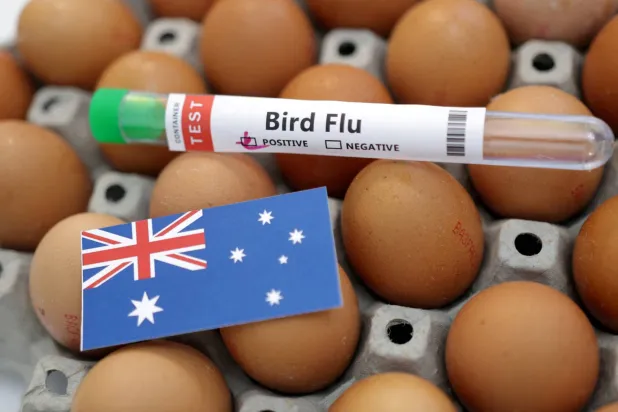
Australia Detects First Case of Contagious H5 Bird Flu
Summarized and contextualized by DistantNews.
At a glance
News
From a news agency
New plan
- Australia has detected the H5 strain of bird flu for the first time in a migratory sea bird.
- This marks the first time the virus has been found on every continent.
- Officials confirmed no evidence of infection in poultry or mass mortalities at this time.
Australia has confirmed its first detection of the H5 strain of bird flu, a highly contagious variant that has now spread to every continent. The virus was found in a brown skua, a migratory sea bird, in remote Western Australia.
Whilst disappointing, this is not unexpected, given the global spread of the H5 bird flu.
Minister for Agriculture Julie Collins stated that samples from another sick bird, a giant petrel found in the same area, also showed a suspected positive result. While disappointing, Collins noted the detection was not unexpected given the virus's global prevalence. She reassured the public that there is currently no evidence of mass deaths in wild birds or any infections in the country's poultry industry.
I can confirm there is still no evidence of any mass mortalities at this time, nor is there any evidence of infection in any poultry.
An emergency meeting of animal health and agriculture officials has been convened to formulate a national response. Prime Minister Anthony Albanese acknowledged the detection is concerning and pledged government measures to contain the spread. He emphasized that the virus's arrival was through migratory birds, a phenomenon observed worldwide, and that preparations are underway.
This is something that has happened through migratory birds, and has happened by definition around the world, and this is why we are preparing for this.
Scientists recently reported that the H5 strain killed over 13,000 elephant seal pups on Australia's remote Heard and McDonald Islands. Concerns exist about the potential impact on Australia's unique fauna, with unique species facing extinction risks. A plan is in place to protect 35 threatened species, including the Tasmanian devil and black swan, through captive breeding programs.
There could clearly be population-level impacts for our species.
DistantNews Editorial
Originally published by Asharq Al-Awsat. Summarized and contextualized by our editorial team with added local perspective. Read our editorial standards.
More Stories



From Our Blog

What Gets Lost (and Found) When News Is Translated

The Critical Role of Diaspora Media in Global News

What Travellers Should Know About Countries with Restricted Press

A Digital Nomad's Guide to Following Local News

How the Same Story Looks Different in Different Countries
