


Australia investigates suspected first mainland case of deadly H5N1 bird flu
Translated from English, summarized and contextualized by DistantNews.
At a glance
News
Named sources
Under investigation
- Australia is investigating the suspected first case of the deadly H5N1 bird flu on its mainland after a migratory wild bird was found sick in Western Australia.
- Initial tests were positive, and confirmation results are expected on Saturday from CSIRO's Australian Centre for Disease Preparedness.
- Officials urge the public not to touch sick or dead birds and to report sightings, while experts warn of potential catastrophic impacts on native wildlife.
Australia is investigating a suspected case of the deadly H5N1 bird flu on its mainland, following the discovery of a sick migratory wild bird in southern Western Australia. Initial testing at a local laboratory yielded a "suspected positive result for avian influenza," according to Agriculture Minister Julie Collins. Samples have been sent for confirmation, with results anticipated on Saturday.
There is no evidence of any mass mortality at this time. Nor is there any evidence of infection in poultry.
Minister Collins stated there is currently no evidence of mass mortality or infection in poultry. The single sick bird tested has since died, and a second unwell bird in the vicinity has also been examined. "If it is confirmed to be the H5 bird flu, this will be sobering, but not unexpected given the spread globally," Collins said, acknowledging that Australia could not remain H5-free indefinitely as the last continent to be unaffected.
If it is confirmed to be the H5 bird flu, this will be sobering, but not unexpected given the spread globally.
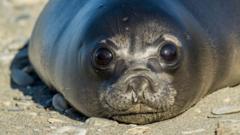
Dr. Carol Booth, a policy director with the Invasive Species Council, expressed deep concern, emphasizing the devastating global impact of the virus. "We desperately hope this is not the realisation of our worst dreams," she stated, referencing recent mass deaths of elephant seals on Heard Island as a potential harbinger. Booth warned that if H5N1 is confirmed, government risk assessments predict catastrophic impacts on native birds, and the virus's increasing ability to infect mammals raises concerns for marine and other wildlife.
We desperately hope this is not the realisation of our worst dreams.
Booth highlighted that while Australian governments have prepared for the virus's arrival, a mainland detection would critically test preparedness and response systems. She urged against complacency, stressing the need for clear response plans and mitigating other threats to susceptible wildlife, even if this instance proves to be a false alarm.
If H5N1 is confirmed, the government’s own risk assessment predicts potentially catastrophic impacts on native birds, while the virus’s increasing ability to infect mammals raises the prospect of severe impacts on marine mammals and other wildlife.
DistantNews Editorial
Originally published by The Guardian in English. Translated, summarized, and contextualized by our editorial team with added local perspective. Read our editorial standards.
More Stories


From Our Blog

What Gets Lost (and Found) When News Is Translated

The Critical Role of Diaspora Media in Global News

What Travellers Should Know About Countries with Restricted Press

A Digital Nomad's Guide to Following Local News

How the Same Story Looks Different in Different Countries
