

Australian judge considers giving court-appointed expert access to Tesla engineering systems
Translated from English and summarized by DistantNews. Read the original for the full story.
At a glance
News
Named sources
In the courts
- An Australian federal judge is considering ordering Tesla to give an independent expert access to its internal engineering platforms in a class action involving about 10,000 owners.
- The lawsuit alleges Model 3 and Model Y vehicles have phantom-braking problems and that Tesla overstated self-driving capabilities and battery range.
- Tesla says its live software systems do not preserve point-in-time records, while the case is scheduled to return to court on Nov. 12.
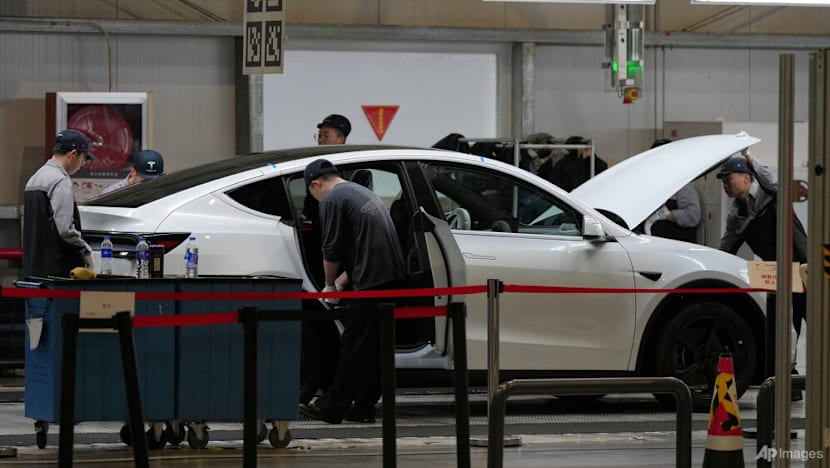
An Australian judge is considering a way to cut through a discovery fight in a class action against Tesla: giving an independent expert direct access to the carmaker’s internal engineering systems.
Federal Court judge Tom Thawley raised the proposal after lawyers for applicants representing about 10,000 Tesla owners said the documents provided by the company did not contain key technical information. The lawsuit, filed in February 2025, alleges that Tesla’s Model 3 and Model Y suffer from phantom braking and that the company overstated their self-driving capabilities and battery range.
Thawley said an expert supported by both sides could remove the need for prolonged document disputes. “It would eliminate the discovery issue because they would have, if they needed access to something, the power to get access,” he told the court on Tuesday, Sept. 1. He said he would not necessarily prevent the expert from reviewing certain material simply because one party objected.
The judge said one court-appointed expert in each relevant field could be cheaper and faster than continued arguments over documents. Lawyers for both sides said they would seek instructions on the suggestion. Fiona Roughley, representing the applicants, said the proposal made sense, while Tesla lawyer Imtiaz Ahmed said the company would consider it and noted that its systems were highly confidential.
The case has not yet reached trial. Tesla maintains that it has provided thousands of documents in good faith, but says its engineers work on live, continuously edited software platforms that do not retain point-in-time records or function like paper files. The matter returns to court on Nov. 12.
It would eliminate the discovery issue because they would have, if they needed access to something, the power to get access.
About this summary
Originally published by CNA in English. Translated, summarized, and contextualized automatically by DistantNews, with a note on how the source frames the story. Not individually reviewed before publishing. How this works.
More Stories


From Our Blog

What Gets Lost (and Found) When News Is Translated

The Critical Role of Diaspora Media in Global News

What Travellers Should Know About Countries with Restricted Press

A Digital Nomad's Guide to Following Local News

How the Same Story Looks Different in Different Countries
