


🇭🇷
Croatia
Australian spider uses catapult-like trap to catch ants
Translated from Croatian, summarized and contextualized by DistantNews.
At a glance
News
Sources not specified
New plan
- A new species of spider has been discovered in Australia that uses a unique catapult-like silk trap to catch aggressive ants.
- The spider, nicknamed 'ballista,' launches prey with a force 15 times greater than fighter pilots experience, moving it away from ant colonies.
- Researchers believe the spider may use pheromones to specifically attract and enrage a single species of ant, a hunting strategy never before seen.
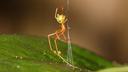
In the remote rainforests of northern Australia, scientists have uncovered a remarkable new species of spider with an extraordinary hunting method. This nocturnal predator, nicknamed "ballista" after an ancient siege weapon, crafts a specialized silk trap that functions like a catapult.
The trap of extremely high power launches the ant into a larger web with a force that is 15 times greater than the most extreme G-forces experienced by fighter jet pilots.
The spider's unique mechanism is designed to capture a single species of aggressive ant, known for its potent chemical defenses and ability to summon reinforcements. The trap "of extremely high power" launches the ant with a force "15 times greater than the most extreme G-forces experienced by fighter jet pilots," according to lead researcher Prof. Ajay Narendra.
Researchers from Macquarie University spent ten nights in the tropical rainforests of northern Queensland, using high-speed and infrared cameras to document the spider's behavior. They observed that the "ballista" spider lives on trees inhabited by the aggressive green ants of the species Oecophylla smaragdina. After dark, the spider descends and constructs a conical "scaffold" of taut silk threads, which it then wraps with a finer silk.
It seems the trap mechanism has evolved as a highly specialized way for the spider to 'pick up' potentially dangerous prey one by one and move it to a safe distance from ant trails and nests.
When the green ants approach and bite the trap, it activates, launching the prey into the spider's larger web with "extreme" acceleration. Scientists noted that these green ants were the only prey caught, even when other nocturnal ants were available. They suspect the spider adds pheromones to the trap to specifically attract and enrage only the green ants. This highly specialized hunting strategy, where the prey triggers the mechanism and is of a single species, is unprecedented in the spider world.
It seems to be the only case where a spider web is designed to catch only one species of prey and where the mechanism is triggered by the prey, not the predator.
DistantNews Editorial
Originally published by Večernji List in Croatian. Translated, summarized, and contextualized by our editorial team with added local perspective. Read our editorial standards.
More Stories



From Our Blog

What Gets Lost (and Found) When News Is Translated

The Critical Role of Diaspora Media in Global News

What Travellers Should Know About Countries with Restricted Press

A Digital Nomad's Guide to Following Local News

How the Same Story Looks Different in Different Countries
