


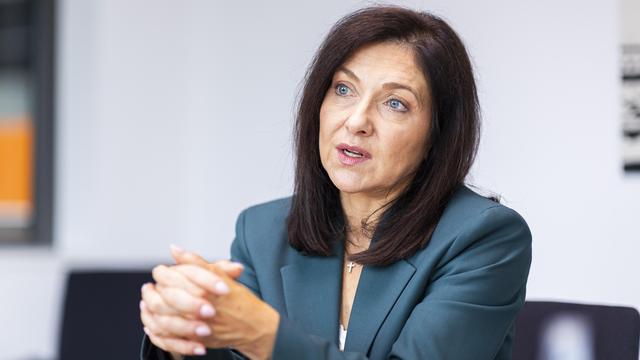
Automotive industry: Katherina Reiche calls for flexible CO2 limits for automakers
Translated from German, summarized and contextualized by DistantNews.
At a glance
News
Named sources
Context piece
- German Economy Minister Katherina Reiche urges the EU Commission to adopt more flexible CO2 limits for automakers.
- Reiche argues that stricter regulations without technological flexibility hinder the auto industry's transformation and lead to costly penalties.
- She also calls for further reforms within Germany to boost economic growth, including reducing labor-related ancillary costs.
German Economy Minister Katherina Reiche is calling on the EU Commission to implement more flexible CO2 emissions standards for the automotive industry. She argues that current regulations, without sufficient technological openness, are impeding the sector's crucial transformation and potentially leading to significant financial penalties for German car manufacturers.
They want to, they can; the range of our automobile manufacturers is impressive. But the transformation costs time and money.
Reiche emphasized that German automakers require a diverse range of drive concepts to remain competitive in global markets. "They want to, they can; the range of our automobile manufacturers is impressive. But the transformation costs time and money," Reiche stated in an interview with dpa. She warned that penalty payments divert essential funds needed for investing in this transition, highlighting the need for Brussels to "make it happen" by making fleet regulations more adaptable to avoid such punitive measures.
Penalty payments divert essential funds needed for investing in this transition.
The minister also stressed the importance of further reforms within Germany to stimulate economic growth. Reiche urged the governing coalition to fully implement the reform package agreed upon before the summer break. However, she cautioned that these measures alone are insufficient for achieving sustainable growth. "Reducing ancillary labor costs more significantly in the long term" is also necessary, she noted, while acknowledging that reforms to the pension system might initially increase these costs.
Brussels now has to make it happen, by making fleet regulations more flexible so that no penalty payments are threatened.
DistantNews Editorial
Originally published by Die Zeit in German. Translated, summarized, and contextualized by our editorial team with added local perspective. Read our editorial standards.
More Stories



From Our Blog

What Gets Lost (and Found) When News Is Translated

How the Same Story Looks Different in Different Countries

The Critical Role of Diaspora Media in Global News

What Travellers Should Know About Countries with Restricted Press

A Digital Nomad's Guide to Following Local News
