


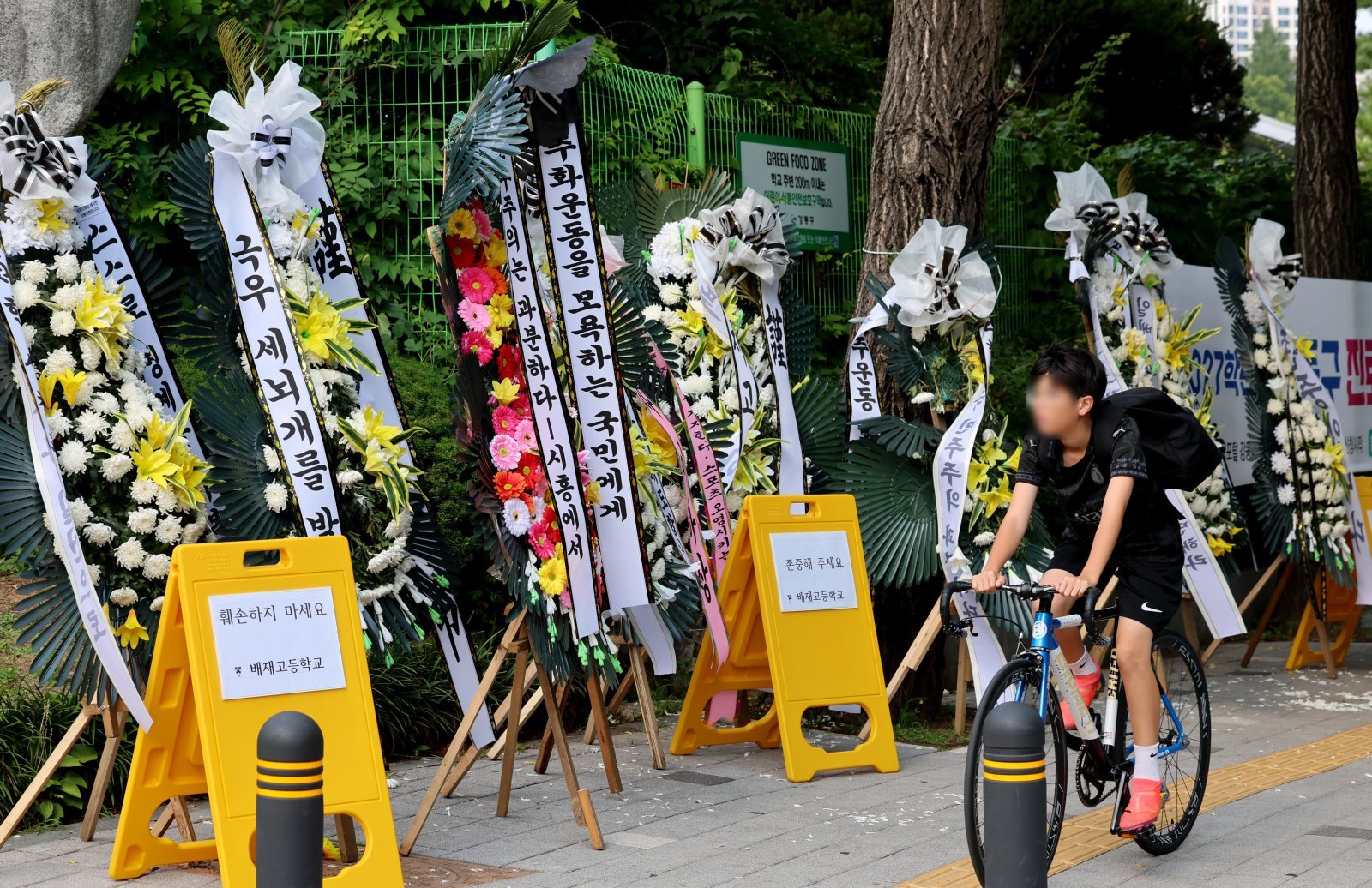
Baejae High baseball team's punishment sparks political conflict
Translated from Korean, summarized and contextualized by DistantNews.
At a glance
News
Named sources
Under investigation
- A disciplinary action against Baejae High School baseball players for using controversial cheers has escalated into a political dispute.
- Conservative groups have filed complaints against the Korea Baseball Softball Association (KBSA) over the severe penalties imposed on the students.
- Politicians from the ruling party criticized the KBSA's decision, calling it a "death sentence" for the players' careers and advocating for educational measures instead of harsh punishments.
A severe disciplinary measure against Baejae High School baseball players for using controversial cheers has ignited a political firestorm, drawing criticism from conservative factions and politicians.
The six-month suspension from national competitions for the entire Baejae High School baseball team is no different from a de facto death sentence for the students' baseball careers.
The players were penalized for chants that some interpreted as disparaging remarks related to the May 18th Gwangju Democratization Movement. The Korea Baseball Softball Association (KBSA) handed down a six-month suspension from national competitions to the entire team, a decision that has drawn sharp condemnation.
Park Sang-woong, a member of the People Power Party, described the suspension as a "de facto death sentence" for the young athletes' baseball careers. He argued that while the cheers were inappropriate, punishing students who did not directly participate in them amounts to collective punishment, akin to guilt by association, rather than an educational approach.
Teaching a mistake and ending a player's life are entirely different matters. Punishing players who did not directly participate in the cheers is closer to collective guilt by association than education.
Park suggested that the focus should be on educating the students about their mistakes and facilitating apologies to those affected, rather than ending their athletic prospects. He questioned the "unreasonable educational decision" to impose such harsh penalties on students while adults involved in similar controversies, like a Starbucks advertising issue, received apologies and preventative measures.
When did the phrase 'Let's go to Starbucks' become a language of hate? If President Lee Jae-myung had not created a divisive frame ahead of the June 3rd local elections, this problem would not have occurred.
Conservative groups have also taken action, with the People's Livelihood Countermeasures Committee filing a complaint against the KBSA president and officials for coercion and obstruction of business. They argue that the players are minors, and the intent behind the cheers was not definitively malicious. The group contends that penalizing starting players in their final year of high school, potentially jeopardizing their college admissions, is an unreasonable act.
The players are minors, and it is difficult to conclude that there was malicious intent behind the cheers. Applying disciplinary action to starting players in their third year of high school, thereby affecting their future, is an unreasonable act.
DistantNews Editorial
Originally published by Dong-A Ilbo in Korean. Translated, summarized, and contextualized by our editorial team with added local perspective. Read our editorial standards.
More Stories



From Our Blog

What Gets Lost (and Found) When News Is Translated

The Critical Role of Diaspora Media in Global News

What Travellers Should Know About Countries with Restricted Press

A Digital Nomad's Guide to Following Local News

How the Same Story Looks Different in Different Countries
