


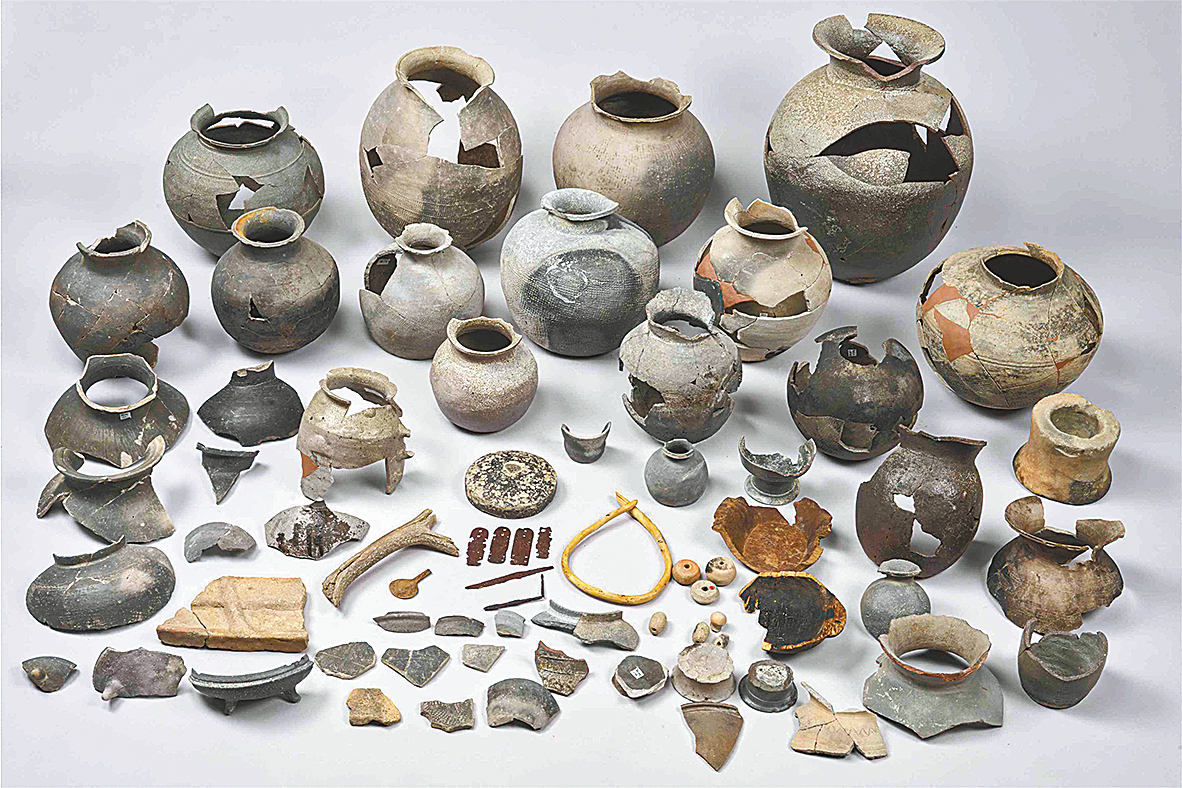
Baekje Fortress Had a Reservoir Capable of Supplying 300 People for Two and a Half Months
Translated from Korean and summarized by DistantNews. Read the original for the full story.
At a glance
News
Official statement
Context piece
- Archaeologists found a large wooden reservoir and rammed-earth walls at Jangmisan Fortress, a Baekje-era site in Chungju.
- The square reservoir could hold about 80,000 liters of water, enough for 300 people for roughly two and a half months.
- A smaller, well-like facility may have allowed residents to manage household and drinking water separately.
A reservoir at Jangmisan Fortress in Chungju could have supplied 300 people with water for about two and a half months, offering a rare glimpse into Baekje-era planning and construction.
The National Research Institute of Cultural Heritage of the National Heritage Administration announced the excavation findings on the first. The discoveries include a large wooden water-collection facility and rammed-earth fortification walls, techniques normally associated with royal-scale fortresses.
The reservoir lies in a valley on the northern side of the fortress. Its inner structure forms a square measuring about 6.7 meters on each side and reaches roughly 1.8 meters deep. It is the oldest Baekje reservoir found so far and the largest wooden reservoir from the period.
Builders fashioned timbers more than seven meters long and interlocked them on four sides, stacking them to nine layers. The structure could store up to 80,000 liters. Archaeologists also found a smaller, well-shaped water facility south of the reservoir, suggesting that the fortress may have managed household water and drinking water separately.
We excavated a large wooden water-collection facility and rammed-earth fortress walls at Jangmisan Fortress.
About this summary
Originally published by Dong-A Ilbo in Korean. Translated, summarized, and contextualized automatically by DistantNews, with a note on how the source frames the story. Not individually reviewed before publishing. How this works.
More Stories


From Our Blog

What Gets Lost (and Found) When News Is Translated

The Critical Role of Diaspora Media in Global News

What Travellers Should Know About Countries with Restricted Press

A Digital Nomad's Guide to Following Local News

How the Same Story Looks Different in Different Countries
