

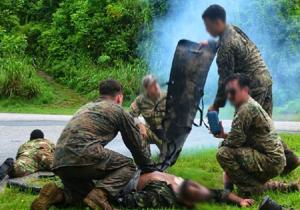

Balancing states of emergency and human rights in the Caribbean
Translated from English and summarized by DistantNews. Read the original for the full story.
At a glance
Analysis
Sources not specified
Context piece
- Caribbean nations face a tension between maintaining safety through states of emergency (SoEs) and preserving human rights.
- The Inter-American Commission on Human Rights (IACHR) favors brief, strictly regulated SoEs, while governments grapple with chronic crises.
- Courts are increasingly scrutinizing the continuous use of SoEs, challenging their constitutional validity.
The Caribbean faces a critical balancing act between ensuring citizen safety amidst organized crime and gang violence, and upholding fundamental human rights. This tension is amplified by recent warnings from the Inter-American Commission on Human Rights (IACHR), an organization dedicated to protecting human rights and preventing state overreach.
The IACHR views states of emergency (SoEs) through the lens of Latin American history, where prolonged emergency powers have historically led to authoritarianism, arbitrary detentions, and the erosion of due process. Consequently, the Commission advocates for SoEs as rare, short-term responses to sudden crises, demanding strict due process, immediate judicial oversight for detainees, and a focus on long-term social programs and institutional reform. Their principles emphasize temporality and proportionality.
This perspective clashes with the daily realities in countries like Trinidad and Tobago, Belize, and Jamaica. While the IACHR may see a temporary disruption, governments are confronting chronic, evolving epidemics of gang violence and homicide that necessitate persistent intervention. The demand for immediate due process strains small, under-resourced nations with overwhelmed judiciaries. Furthermore, while the IACHR promotes long-term social solutions, governments must prioritize immediate survival, as social programs take a generation to yield results, often too late to stem surges in violent murders.
Trinidad and Tobago, for example, contends with a sophisticated, transnational criminal threat involving heavily armed gangs, smuggled high-powered weaponry, and significant narco-financing. In a justice system reliant on witness testimony, providing evidence is perilous. High levels of violence overwhelm law enforcement, making SoEs a crucial tool to freeze deteriorating situations, disrupt criminal networks, and reclaim control of hot zones through detentions and curfews. However, the IACHR's critique is gaining traction in Caribbean courts. Similar to a ruling in Jamaica, courts are beginning to question the continuous cycle of SoEs, viewing it as undermining the separation of powers and treating a structural problem as a temporary emergency. Legal challenges are mounting in Trinidad and Tobago, with the Privy Council recently hearing arguments on a case related to a 2011 state of emergency.
About this summary
Originally published by Trinidad Express in English. Translated, summarized, and contextualized automatically by DistantNews, with a note on how the source frames the story. Not individually reviewed before publishing. How this works.
More Stories

From Our Blog

News in Translation: What Gets Lost, and How We Keep the Framing

Diaspora Media: How Communities Abroad Follow Home

Traveling Where the Press Is Not Free: How to Read the News There

The Digital Nomad's Guide to Local News

The Same Story, Different Countries: How Coverage Changes at the Border
