


Bali Activists Criticize Anti-People Policies with Symbolic Protests
Translated from Indonesian, summarized and contextualized by DistantNews.
At a glance
News
Named sources
Context piece
- Activists in Denpasar, Bali, protested government policies they deem anti-people and anti-environment.
- The demonstration, themed "Grubug Agung Pulihkan Bali & Indonesia" (Great Chaos Restore Bali & Indonesia), used symbolic actions like beating traditional drums and theatrical performances.
- Protesters criticized rising living costs, environmental damage, and what they described as a deteriorating democratic climate and repressive actions against activists.
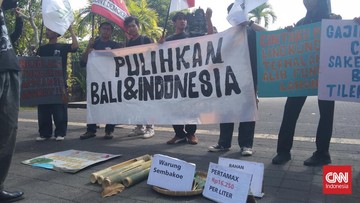
A group of activists in Denpasar, Bali, staged a protest against government policies they claim are detrimental to the people and the environment. The demonstration, held near the Bajra Sandhi Monument, carried the theme "Grubug Agung Pulihkan Bali & Indonesia," signifying a "great chaos" that necessitates the restoration of Bali and Indonesia.
The beating of the kulkul bulus is symbolic, indicating that the state of democracy today is chaotic and democracy is not doing well.
Participants, including organizations like Kekal Bali, Frontier Bali, and Walhi Bali, carried banners and posters criticizing government actions. One banner read, "My love for the environment is hindered by land function conversion." They also employed symbolic actions, such as beating traditional Balinese "kulkul bulus" (split bamboo slit drums) and presenting "tampah" (woven bamboo trays) filled with vegetables.
A theatrical performance depicted a customer complaining about soaring basic necessities prices to a vendor. The vendor explained that rising fuel costs and a weakening rupiah forced price increases. The skit concluded with the "people" attempting to voice their grievances to the government, only to face repressive actions and the use of "hard water" (likely referring to tear gas or pepper spray) against human rights and environmental activists, portraying a deteriorating democratic situation.
So the symbolism is with the kulkul bulus, like how Balinese culture today (beats) the kulkul bulus loudly, symbolizing the chaos in this country.
I Wayan Sathya Tirtayasa, Secretary-General of Frontier Bali, explained that beating the kulkul bulus symbolized the chaotic state of democracy in Indonesia. He elaborated that "Grubug Agung" reflects the current dire situation in the country and Bali, characterized by government policies that are not pro-people or pro-environment. "We can see how the people themselves are facing difficulties amid today's economic situation. Added to that are environmental policies; today, the government is not firm with those who damage the environment," Tirtayasa stated.
Grubug Agung is raised in this action because we see the situation in this country and also on the Island of the Gods (Bali) is not doing well.
The activists vowed to continue their struggle and voice their dissent as long as injustice persists and the government fails to act decisively. They emphasized their opposition to policies that harm the public and the environment, calling for immediate government intervention.
There is great chaos, there are government policies that to this day are not pro-people and the environment. That is the symbolism of the term grubug agung.
DistantNews Editorial
Originally published by CNN Indonesia in Indonesian. Translated, summarized, and contextualized by our editorial team with added local perspective. Read our editorial standards.
More Stories


From Our Blog

What Gets Lost (and Found) When News Is Translated

The Critical Role of Diaspora Media in Global News

What Travellers Should Know About Countries with Restricted Press

A Digital Nomad's Guide to Following Local News

How the Same Story Looks Different in Different Countries
