


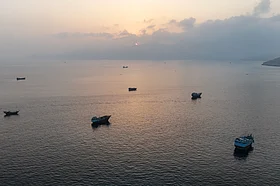

‘Ball is in Iran’s court’: GCC chief says Tehran must rebuild Gulf trust after attacks
Summarized by DistantNews. Read the original for the full story.
At a glance
News
Named sources
Ongoing story
- Gulf Cooperation Council Secretary-General Jasem Mohamed AlBudaiwi said Iran must rebuild trust with Gulf states through concrete actions after months of attacks across the region.
- The six-member bloc is accelerating projects involving logistics, strategic reserves, pipelines, water, electricity and military coordination after the Strait of Hormuz closed.
- AlBudaiwi said the crisis exposed both the GCC’s existing practical cooperation and the need for deeper integration, while another UAE official warned that restoring trust with Iran could take decades.
The Gulf Cooperation Council has told Iran that the next move is Tehran’s. After months of attacks across the region, the relationship has returned to “square one,” GCC Secretary-General Jasem Mohamed AlBudaiwi said on Monday.
“The ball is in Iran’s court,” AlBudaiwi said during a fireside chat at the Hili Forum in Abu Dhabi. “It is Iran that must prove itself to the GCC states and the international community.” He said Tehran would need to demonstrate through its actions that it wanted a different relationship.
The ball is in Iran’s court.
While the political relationship remains deeply strained, the six GCC states are moving ahead with projects shaped by the crisis that followed February 28. The plans include stronger logistics links, water interconnection, strategic reserves, alternative routes for oil and gas pipelines, and greater electricity interconnection capacity. AlBudaiwi said some projects were 50 to 60 percent complete, while others had reached about 70 percent, without identifying the status of individual projects.
It is Iran that must prove itself to the GCC states and the international community.
The effort followed an extraordinary consultative meeting of GCC leaders in Jeddah on April 28. The bloc’s General Secretariat received instructions to study the crisis and accelerate joint projects. An official statement listed transport and logistics, the GCC railway, electricity, oil and gas pipelines, water, and strategic reserves among the priorities. Leaders also called for closer military integration and faster completion of a ballistic-missile early-warning system.
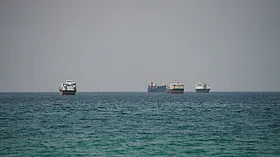
AlBudaiwi pointed to the closure of the Strait of Hormuz as a test of the bloc’s practical cooperation. Bahrain, Qatar and Kuwait faced serious logistical difficulties because of their geography, he said, while the UAE, Saudi Arabia and Oman supplied ports, roads, trucks, containers and other capacity. Some regulations were temporarily relaxed to keep goods moving. He described the six states as operating like a “beehive,” coordinating military, economic, security, health, food, water and electricity matters. By June, the GCC said more than 150 extraordinary ministerial and technical meetings had addressed the attacks’ repercussions, while AlBudaiwi said GCC forces had intercepted more than 7,000 ballistic missiles and drones launched by Iran toward member states.
What the UAE, Saudi Arabia and our brothers in Oman provided was remarkable. Nothing was missing.
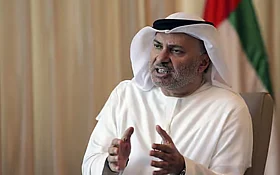
The crisis also exposed differences over how united the Gulf response has been. UAE Diplomatic Adviser Anwar Gargash said Gulf states had not always translated their shared understanding of the strategic challenge posed by Iran into sufficiently coordinated action. He said rebuilding trust could take decades. AlBudaiwi, meanwhile, emphasized the cooperation already demonstrated, while acknowledging that the GCC must decide where still deeper integration is needed.
Trucks were going back and forth, ports were open to us, the platforms at the ports, the containers, the roads, the trucks.
About this summary
Originally published by Khaleej Times. Summarized and contextualized automatically by DistantNews, with a note on how the source frames the story. Not individually reviewed before publishing. How this works.
More Stories
From Our Blog

News in Translation: What Gets Lost, and How We Keep the Framing

Diaspora Media: How Communities Follow News From Home

Traveling Where the Press Is Not Free: How to Read the News There

The Digital Nomad's Guide to Local News

The Same Story, Different Countries: How Coverage Changes at the Border
