


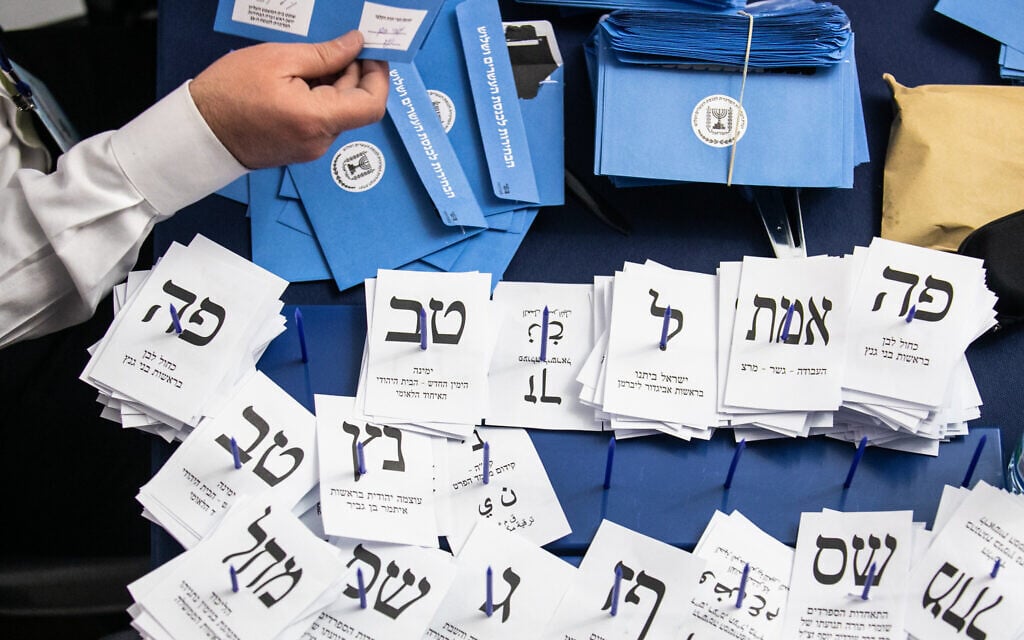
Ballot battlefield takes shape as sides tussle over voters homebound and homeward bound
Summarized and contextualized by DistantNews.
At a glance
News
Sources not specified
Ongoing story
- An Israeli political campaign billboard featuring Gadi Eisenkot appeared near Larnaca Airport in Cyprus, targeting Israeli vacationers.
- This unprecedented move highlights the evolving nature of Israel's upcoming election campaign, with parties vying for advantages in a potentially close race.
- The campaign is increasingly focused on ballot access for specific voter groups, including elderly Israelis and expatriates, raising questions about the fairness of the electoral process.
Larnaca, Cyprus – An unusual political billboard featuring Gadi Eisenkot, Prime Minister Benjamin Netanyahu's main rival, appeared near Larnaca Airport last month, specifically addressing Israeli vacationers in Hebrew. This marks an unprecedented effort to court Israeli votes outside of Israel and offers an early glimpse into what is shaping up to be a highly unconventional Israeli election campaign.
Experts suggest this tactic signifies a broader trend where the electoral process itself is becoming a political battleground. Parties are intensely focused on securing advantages by targeting usually overlooked voter niches. The campaign is increasingly characterized by battles over ballot box access for various groups, including elderly Israelis and those residing abroad, who are perceived as leaning towards center-left parties.
In previous elections, the main questions were usually who would govern, which coalition would be formed, and what policies it would pursue. This time, for many Israelis, the election is also about the future character of the political system itself.
Disputes are emerging over the placement of polling stations in elderly care homes and the ability of expatriates to travel back to vote. Concerns are also being raised about transportation for voters within Israel and potential voter intimidation. These issues are collectively turning the fundamental question of Israel's ability to hold free and fair elections into a point of contention.
Yael Shomer, an associate professor at Tel Aviv University, described the October 27 ballot as potentially one of the most consequential in Israel's history. She noted that beyond the usual questions of governance, coalition formation, and policy, this election is also about the future character of Israel's political system itself for many citizens. Assaf Shapira of the Israel Democracy Institute links these electoral system battles to broader trends of polarization and populism, observing increased attacks on the Central Elections Committee by those who distrust state authorities.
You see increasing attacks on the Central Elections Committee… by representatives or Knesset members or journalists identified with the right-wing bloc. You don’t believe the authorities of the state. You think that they are supporters of a specific political bloc.
DistantNews Editorial
Originally published by Times of Israel. Summarized and contextualized by our editorial team with added local perspective. Read our editorial standards.
More Stories


From Our Blog

What Gets Lost (and Found) When News Is Translated

The Critical Role of Diaspora Media in Global News

What Travellers Should Know About Countries with Restricted Press

A Digital Nomad's Guide to Following Local News

How the Same Story Looks Different in Different Countries
