


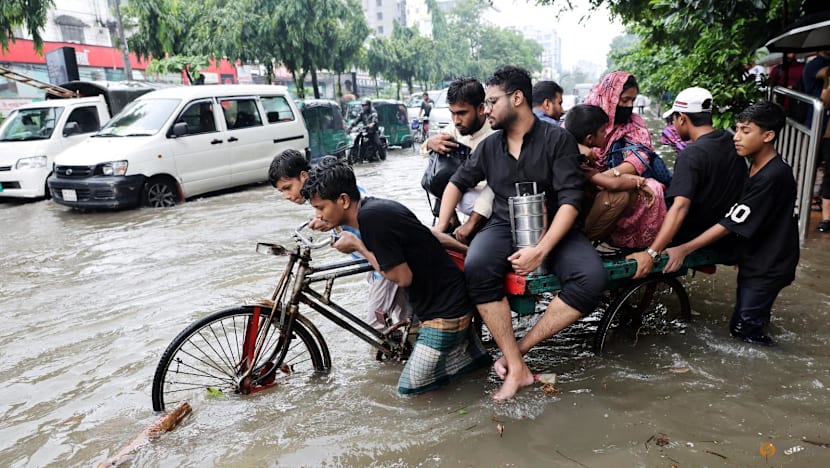
Bangladesh floods heighten dengue, cholera risks, says IFRC
Summarized and contextualized by DistantNews.
At a glance
News
Named sources
Ongoing story
- Severe flooding and landslides in Bangladesh have killed at least 50 people and displaced over 1 million.
- The disaster has increased the risk of waterborne diseases like dengue and cholera.
- Aid efforts are being hampered by damaged infrastructure and difficult terrain.
Bangladesh is grappling with the devastating aftermath of severe flooding and landslides triggered by days of heavy rainfall. At least 50 people have died, and more than 1 million are stranded due to the widespread inundation across seven districts. The International Federation of Red Cross and Red Crescent Societies (IFRC) warns that the disaster has significantly heightened the risk of public health threats, including outbreaks of dengue and cholera. Sonakshi Dey, the IFRC's Bangladesh programme director, described the situation as "quite grave," emphasizing the challenges in reaching affected populations due to the country's difficult topography. More than 10,700 water and sanitation facilities have been damaged, making access to safe drinking water a top priority. Relief efforts, involving agencies like the World Health Organization and UNICEF, are further complicated by damaged roads and infrastructure. In Cox's Bazar, over 180,000 people are impacted, including Rohingya refugees living in vulnerable makeshift shelters. The IFRC is working to move people to safer locations and provide essential supplies, but the scale of the disaster stretches resources thin, compounding an already challenging humanitarian situation marked by a recent measles outbreak.
This situation is quite grave. The main problem is the access to reach the people, because the geographical topography of the country is also very difficult.
DistantNews Editorial
Originally published by CNA. Summarized and contextualized by our editorial team with added local perspective. Read our editorial standards.
More Stories


From Our Blog

What Gets Lost (and Found) When News Is Translated

The Critical Role of Diaspora Media in Global News

What Travellers Should Know About Countries with Restricted Press

A Digital Nomad's Guide to Following Local News

How the Same Story Looks Different in Different Countries
