


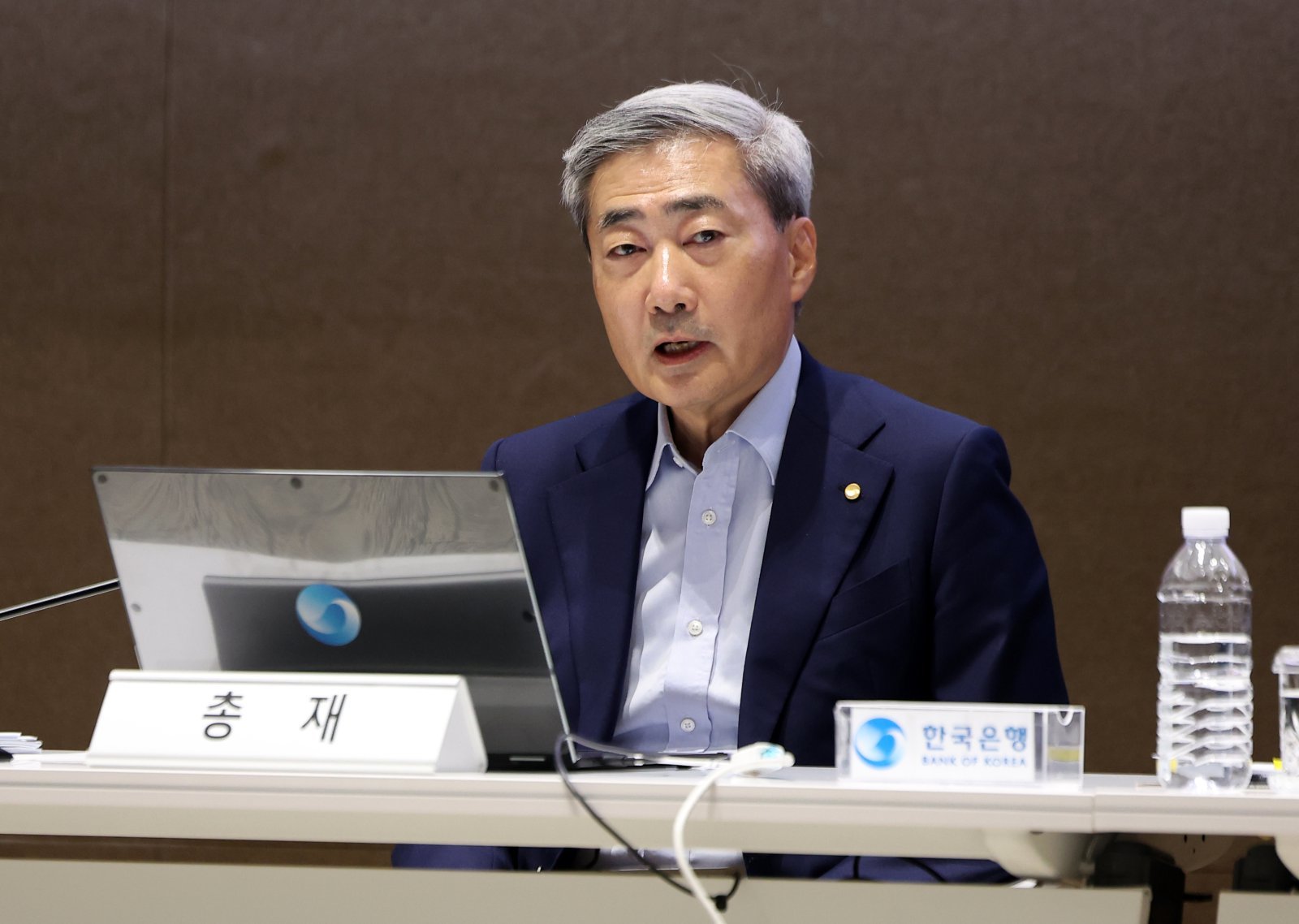
Bank of Korea disputes 'semiconductor peak' theory, sees limited risk of market downturn
Translated from Korean, summarized and contextualized by DistantNews.
At a glance
News
Official statement
New plan
- The Bank of Korea stated that the domestic stock market is unlikely to enter a downward trend, countering concerns about a semiconductor industry peak.
- This assessment diverges from global investment banks like Goldman Sachs and Morgan Stanley, which warned of risks in semiconductor stocks due to concentrated investment and high expectations.
- The Korean stock market, particularly semiconductor shares like Samsung Electronics and SK Hynix, experienced a sharp decline recently, prompting the 'semiconductor peak theory'.
The Bank of Korea has pushed back against a growing 'semiconductor peak theory' that has gripped the domestic stock market. Recent sharp declines in shares of tech giants Samsung Electronics and SK Hynix, which fell for two consecutive days, fueled concerns that the market had reached its zenith. However, the central bank asserted that a sustained downturn is unlikely.
In a report submitted to the National Assembly's Finance and Economy Committee, the Bank of Korea stated that the possibility of a "trend reversal downward for domestic stocks is limited." The bank cited the continuous upward revision of earnings forecasts for semiconductor companies and the government's efforts to improve capital market systems as reasons for its optimistic outlook.
This view contrasts with warnings from major global investment banks. Goldman Sachs and Morgan Stanley, among others, had previously flagged concerns about the heavy concentration of investment in semiconductor stocks and the elevated expectations surrounding their performance. The recent market movements, with major semiconductor firms experiencing significant drops despite strong earnings reports, have amplified these worries, leading to a 5.35% drop in the KOSPI index on a single day.
The possibility of a trend reversal downward for domestic stocks is limited.
DistantNews Editorial
Originally published by Dong-A Ilbo in Korean. Translated, summarized, and contextualized by our editorial team with added local perspective. Read our editorial standards.
More Stories


From Our Blog

What Gets Lost (and Found) When News Is Translated

The Critical Role of Diaspora Media in Global News

What Travellers Should Know About Countries with Restricted Press

A Digital Nomad's Guide to Following Local News

How the Same Story Looks Different in Different Countries
