


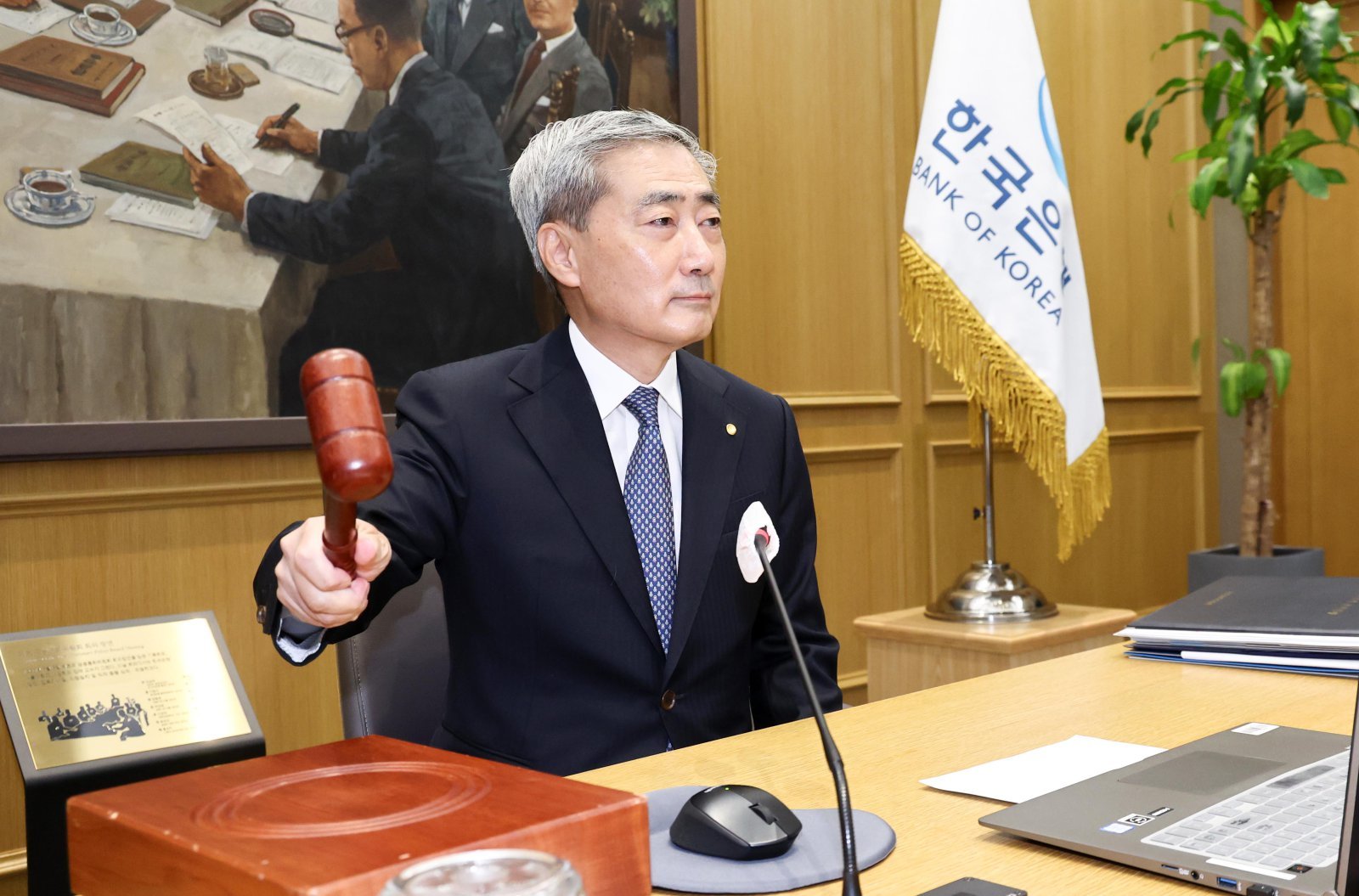
Bank of Korea Governor: Expect Gradual Rate Hikes After Consecutive Increases
Translated from Korean and summarized by DistantNews. Read the original for the full story.
At a glance
News
Named sources
New plan
- Bank of Korea Governor Shin Hyun-song indicated that future interest rate hikes are expected to be gradual following two consecutive increases.
- He emphasized the need to observe the impact of recent hikes, which were implemented preemptively to control inflation and stabilize the exchange rate.
- The governor mentioned that nominal GDP, inflation, and business sentiment will be key factors in the October rate decision.
Bank of Korea Governor Shin Hyun-song signaled a shift towards more moderate interest rate adjustments, following the central bank's decision to raise the benchmark rate for the second consecutive month. Speaking to reporters after the Monetary Policy Committee meeting, Shin stated that the bank needs to assess the effects of these recent hikes before proceeding further.
We need to see the effects of raising rates twice now. Because we raised rates twice preemptively, we expect the exchange rate to fall and import prices and inflation to stabilize.
Shin projected that the median forecast for the rate six months ahead suggests one more increase, but stressed the importance of observing the impact of the current two-step hikes. He expressed confidence that these preemptive measures would help lower the exchange rate, stabilize import prices, and curb inflation. The governor highlighted that such proactive policy actions aim to control expected inflation and prevent price increases from becoming widespread, ultimately reducing the economic cost of tightening monetary policy.
Preemptive response means controlling expected inflation and responding early before price increases spread, ultimately reducing the cost to the economy.
The governor acknowledged that the back-to-back rate increases were an unusual move, intended to send a strong signal to the market. He pointed to core inflation as the most reliable indicator of underlying price pressures, with the forecast for core inflation revised upward to 2.5% for the year. Shin also noted that timely and proactive monetary policy is crucial for anchoring market expectations and contributing to exchange rate stability, especially given global discussions on long-term interest rates and currency values.
This was an unusual measure... it sent a strong signal to the market.
While acknowledging that interest rates alone cannot fully control housing prices, Shin suggested that the current monetary policy could help moderate the rapid rise in real estate values and household debt. He also addressed a dissenting opinion within the committee, describing it as a tactical difference within a broader consensus on the overall direction of policy. The governor concluded by stating that the market's reaction to the recent rate hikes has been positive, with the exchange rate showing some stability and even a slight decrease in long-term government bond yields.
We believe that preemptive and early response helps stabilize market expectations and contributes to exchange rate stability.
About this summary
Originally published by Dong-A Ilbo in Korean. Translated, summarized, and contextualized automatically by DistantNews, with a note on how the source frames the story. Not individually reviewed before publishing. How this works.
More Stories


From Our Blog

What Gets Lost (and Found) When News Is Translated

The Critical Role of Diaspora Media in Global News

What Travellers Should Know About Countries with Restricted Press

A Digital Nomad's Guide to Following Local News

How the Same Story Looks Different in Different Countries
