


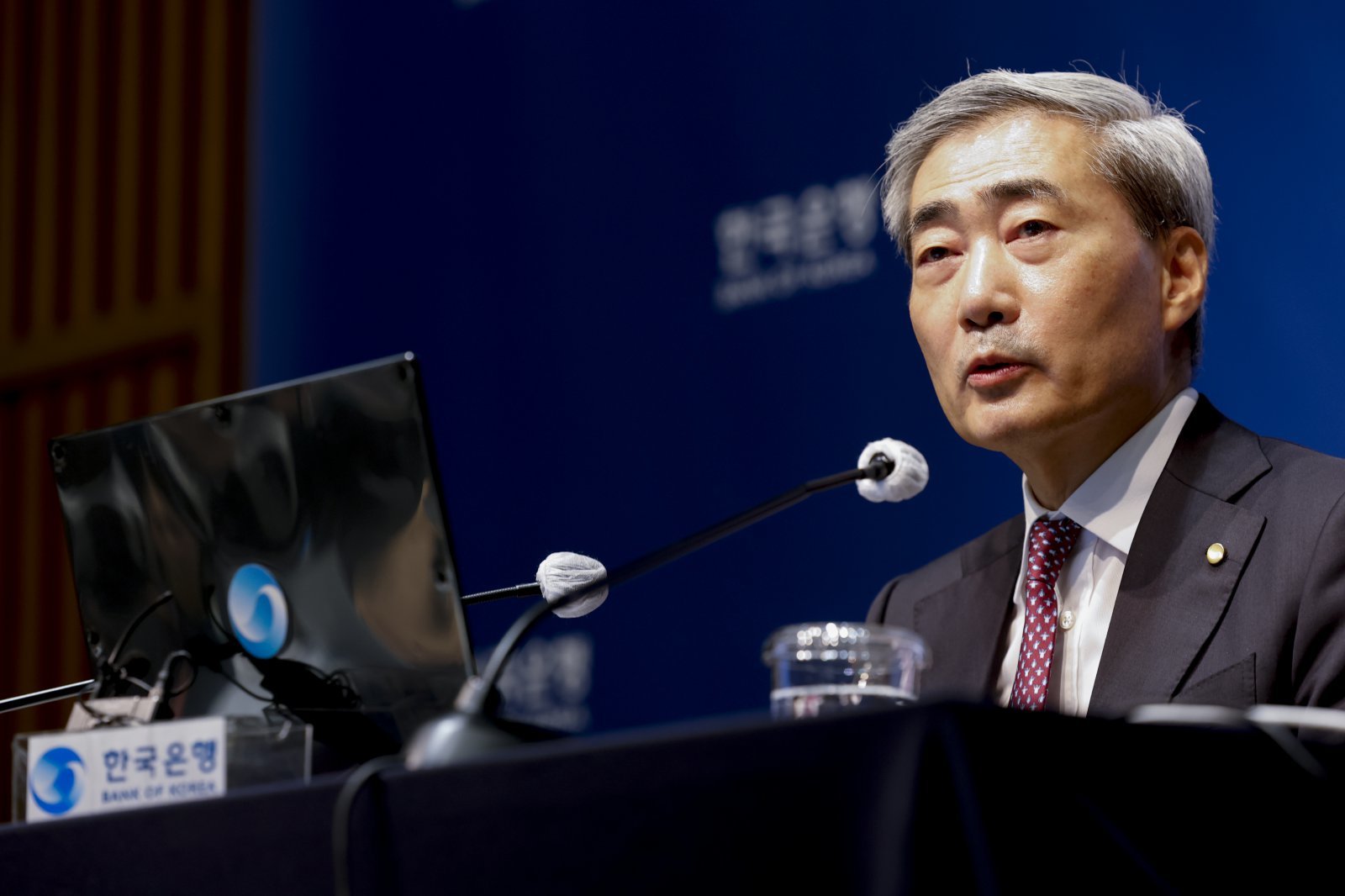
Bank of Korea: Interest Rate Hikes to Continue Amid Strong Semiconductor Outlook
Translated from Korean, summarized and contextualized by DistantNews.
At a glance
News
Official statement
Context piece
- The Bank of Korea reiterated its stance on the need to continue raising interest rates, with the timing and pace dependent on inflation, economic growth, and financial stability.
- The central bank projects a sustained expansion in the global semiconductor market, driven by AI investments, with South Korea holding a competitive edge in high-bandwidth memory (HBM) chips.
- Despite a strong semiconductor outlook, potential risks include financial market adjustments due to AI profitability concerns, reduced big tech investment, and energy bottlenecks.
The Bank of Korea (BOK) has reaffirmed its position that a continued interest rate hike trajectory is necessary, emphasizing that the timing and pace of any further increases will be carefully calibrated based on inflation pressures, economic recovery trends, and the stability of the financial system. This stance comes after the BOK recently decided to raise the benchmark interest rate by 0.25 percentage points, ending a period of holding it at 2.50% since the latter half of last year.
Globally, the BOK anticipates a prolonged expansion in the semiconductor industry, largely propelled by increased investments in artificial intelligence (AI) applications and related infrastructure. South Korea is seen as a key player in this growth, particularly in the high-bandwidth memory (HBM) chip sector, where it holds a competitive advantage. The demand for AI servers has also driven up prices for general-purpose semiconductors, which are currently in short supply.
However, the BOK also cautioned about potential headwinds that could impact this positive outlook. These include possible financial market corrections stemming from concerns over AI profitability, a potential reduction in capital expenditure by major technology firms, and energy supply constraints. These factors represent downside risks that could temper the anticipated growth.
Domestically, the BOK noted that the semiconductor boom is expected to improve income conditions and boost investment, gradually increasing inflationary pressures. Persistent high exchange rates are contributing to rising import prices, while surging memory chip prices are giving companies more leeway to increase their own product prices. Consequently, the BOK forecasts that inflation rates will likely remain above the target level in the latter half of the year, influenced by international oil price volatility and rising costs for industrial and personal services.
DistantNews Editorial
Originally published by Dong-A Ilbo in Korean. Translated, summarized, and contextualized by our editorial team with added local perspective. Read our editorial standards.
More Stories



From Our Blog

What Gets Lost (and Found) When News Is Translated

The Critical Role of Diaspora Media in Global News

What Travellers Should Know About Countries with Restricted Press

A Digital Nomad's Guide to Following Local News

How the Same Story Looks Different in Different Countries
