


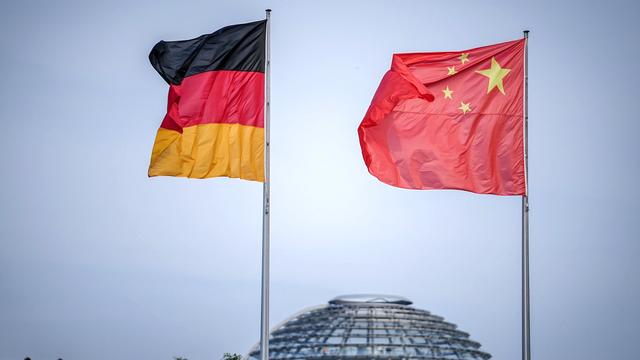
BDI: 'China shock 2.0' hits German industry hard
Translated from German, summarized and contextualized by DistantNews.
At a glance
News
From a news agency
Context piece
- The Federation of German Industries (BDI) warns of a "China shock 2.0" impacting German industry broadly.
- Key issues include dependencies on critical raw materials, a devalued currency, and state-induced overcapacities flooding EU markets.
- The BDI advocates for strengthening the rules-based international order while developing European self-defense mechanisms, not complete decoupling.
The Federation of German Industries (BDI) is sounding the alarm over a "China shock 2.0," warning that the country's economic practices are severely impacting German industry across the board. Tanja Gönner, the BDI's chief executive, described the situation as a broad challenge, not limited to specific sectors.
"We are experiencing a China shock 2.0," Gönner stated. "It affects not only individual sectors but massively impacts industry across the board: through dependencies on critical raw materials, a significantly undervalued currency, state-induced overcapacities which, due to a weak domestic market in China and market closures, particularly in the USA, are flooding the EU internal market unchecked." She also pointed to China's ambition to dominate key technologies globally.
We are experiencing a China shock 2.0. It affects not only individual sectors but massively impacts industry across the board: through dependencies on critical raw materials, a significantly undervalued currency, state-induced overcapacities which, due to a weak domestic market in China and market closures, particularly in the USA, are flooding the EU internal market unchecked.
Gönner stressed that Europe still has options and that approximately 60 percent of global trade operates under World Trade Organization rules. She highlighted the importance of the EU finalizing trade agreements, such as the provisional Mercosur agreement signed in early May, which aims to boost trade through tariff reductions.
While advocating for stronger enforcement of rules and European resilience, the BDI does not support complete economic decoupling from China. "Europe needs more assertiveness towards China, but not complete isolation," Gönner clarified. She urged for quicker European responses and new forms of collaboration between politics and business to uphold the rules-based order while simultaneously developing defensive strategies. The BDI's stance reflects a shift from 2019, when China was viewed more as a partner, to the current classification as a partner, competitor, and systemic rival.
Europe needs more assertiveness towards China, but not complete isolation.
DistantNews Editorial
Originally published by Die Zeit in German. Translated, summarized, and contextualized by our editorial team with added local perspective. Read our editorial standards.
More Stories



From Our Blog

What Gets Lost (and Found) When News Is Translated

How the Same Story Looks Different in Different Countries

The Critical Role of Diaspora Media in Global News

What Travellers Should Know About Countries with Restricted Press

A Digital Nomad's Guide to Following Local News
