

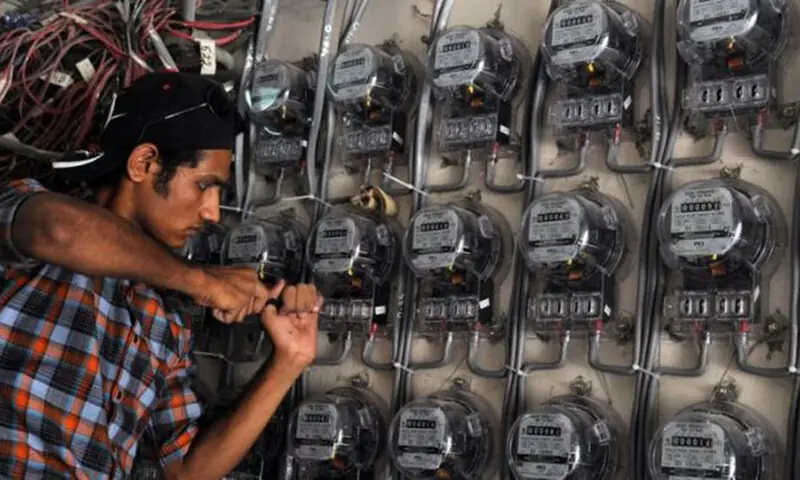

Before AI hits the grid
Summarized and contextualized by DistantNews.
At a glance
Analysis
Sources not specified
Context piece
- Pakistan announced plans to allocate 2,000 megawatts of electricity for Bitcoin mining and AI data centers, sparking debate about affordability.
- The country's electricity challenge involves not just generation capacity but also timing, location, and grid reliability.
- Pakistan has an opportunity to integrate new data center demand strategically by considering workload flexibility and grid constraints from the outset.
Pakistan's announcement of allocating 2,000 megawatts for Bitcoin mining and AI data centers has ignited a discussion about the nation's power capacity. However, the critical question isn't simply whether the country can afford the power, but how this new, specialized demand can be integrated into the existing electricity system.
Bitcoin mining, AI training and real-time digital services do not exactly place identical demands on the electricity system.
Unlike typical consumers, Bitcoin mining and AI training place different demands on the grid. Pakistan's energy challenges extend beyond total generation capacity to encompass the timing and location of electricity needs, and the network's ability to deliver power reliably, especially during peak demand periods like hot summer months when cooling needs strain the system. Transmission constraints, substation capacity, and power quality are as crucial as the headline allocation.
Pakistan’s electricity challenge is about more than the amount of generation capacity available.
This situation presents Pakistan with a unique chance to shape a significant new category of demand before it becomes entrenched. Data centers, with their specific requirements for location, cooling, equipment, and grid connections, allow for proactive planning. Recognizing that not all computing demands are identical is key. User-facing applications and financial platforms require continuous availability, while certain data processing and model training can be more flexible, allowing for scheduling outside peak hours or even pausing during grid stress.
Some services are highly sensitive to delay. User-facing AI applications, financial platforms and communications systems may require continuous availability.
This flexibility can be translated into tariffs and connection agreements. Workloads could be scheduled during off-peak hours, operators could provide more accurate forecasts, and consumption changes could be limited. Some systems could even utilize storage to alleviate network pressure during short stress periods. This approach mirrors strategies seen elsewhere; Ireland, for instance, now assesses new data center connections partly on the applicant's ability to prove demand flexibility, embedding this commitment into connection agreements.
Other workloads may offer more flexibility. Certain forms of data processing and model training can be scheduled within broader time windows, distributed across locations or paused at planned checkpoints, depending on how the systems are designed.
DistantNews Editorial
Originally published by Dawn. Summarized and contextualized by our editorial team with added local perspective. Read our editorial standards.
More Stories
From Our Blog

What Gets Lost (and Found) When News Is Translated

The Critical Role of Diaspora Media in Global News

What Travellers Should Know About Countries with Restricted Press

A Digital Nomad's Guide to Following Local News

How the Same Story Looks Different in Different Countries
