

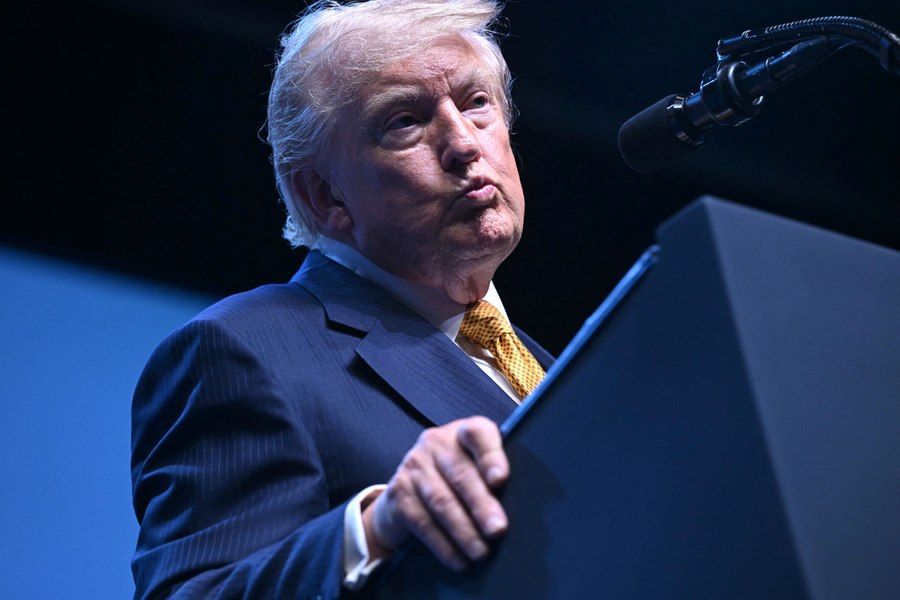

Beijing's Shadow Pact: The China-Russia Alliance and the Shifting Global Order
Translated from Romanian and summarized by DistantNews. Read the original for the full story.
At a glance
News
Named sources
Context piece
- A Bloomberg commentator warns that China, under Xi Jinping, is consolidating power and reshaping the global order, leveraging US weakness and its partnership with Russia.
- Recent meetings between Xi and both Donald Trump and Vladimir Putin highlight Beijing's more aggressive stance on global issues, from trade to Taiwan.
- The analysis suggests that while China engages diplomatically with the US, its strategic alliance with Russia, driven by mutual dependence, aims to undermine American influence.
The recent diplomatic dance in Beijing, featuring separate meetings between Chinese President Xi Jinping and both American leader Donald Trump and Russian President Vladimir Putin, underscores a seismic shift in global power dynamics. As Hal Brands, a commentator for Bloomberg and professor at Johns Hopkins University, points out, the world is entering a perilous period of instability. China, under Xi's increasingly confident leadership, is not merely participating in the existing international order; it is actively forging a new one, capitalizing on perceived American decline and the protracted conflict in Ukraine.
This strategic maneuvering is particularly evident in China's relationship with Russia. Despite the global spotlight on US-China trade and security issues, the true strategic partner for Beijing remains Moscow. Russia's isolation due to the Ukraine war has made it politically and economically beholden to China, evident in major energy projects like the 'Power of Siberia-2' pipeline and discussions around Chinese drone component exports to Ukraine. The coordinated efforts of these two authoritarian regimes to erode US influence are palpable, with Xi's pronouncement of 'changes unseen in a century' echoing the ambitions of a rising power.
If the United States does not immediately realize the scale of this challenge and succeed in uniting the democratic world, 'determined tyrants might, this time, be right'.
From our perspective at Adevărul, the narrative often presented in Western media, which may focus on the transactional nature of Trump's engagement or the immediate geopolitical implications, misses a crucial local context. For Romania and much of Eastern Europe, the strengthening Sino-Russian axis is not an abstract geopolitical theory but a tangible threat to regional stability and democratic values. The article's stark warning that 'determined tyrants might, this time, be right' if the democratic world fails to unite is a call to action that resonates deeply here. The article highlights how China's diplomatic engagement with Washington might be a tactical pause, a necessary breathing room to bolster its economy and technological sector, while its core strategic alignment solidifies with Moscow.
the world is undergoing 'changes unseen in a century'.
About this summary
Originally published by Adevărul in Romanian. Translated, summarized, and contextualized automatically by DistantNews, with a note on how the source frames the story. Not individually reviewed before publishing. How this works.
More Stories
From Our Blog

News in Translation: What Gets Lost, and How We Keep the Framing

Diaspora Media: How Communities Abroad Follow Home

Traveling Where the Press Is Not Free: How to Read the News There

The Digital Nomad's Guide to Local News

The Same Story, Different Countries: How Coverage Changes at the Border
