


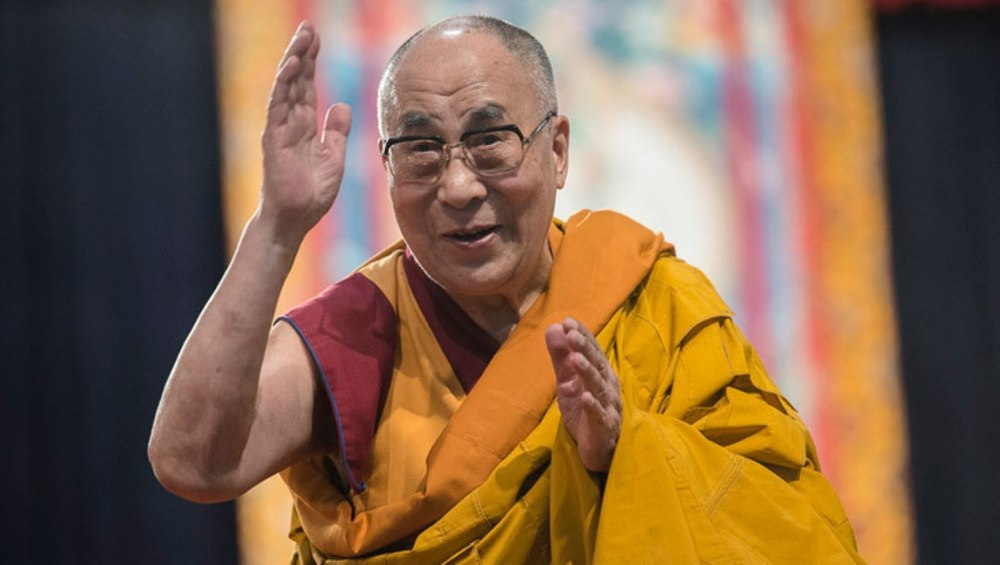
Beijing tightens grip on Dalai Lama succession, eyes control over Tibetan spiritual leadership
Translated from Romanian, summarized and contextualized by DistantNews.
At a glance
News
Named sources
Context piece
- Beijing is intensifying efforts to control the traditional selection process for the Dalai Lama's successor as the current spiritual leader approaches 91 years old.
- While the current Dalai Lama favors traditional religious methods, the Chinese Communist Party insists the decision rests with the central government, a move seen as an attempt to consolidate control over Tibet.
- Analysts suggest China's interference could lead to two competing spiritual leaders: one recognized by Beijing and rejected by Tibetans, and another chosen through traditional means, likely outside China.
Beijing is escalating its efforts to assert control over the traditional process of selecting the successor to the Dalai Lama, as the current spiritual leader, Tenzin Gyatso, approaches his 91st birthday. This move is viewed by analysts as a strategic maneuver to consolidate China's influence over Tibet and extend its geopolitical reach in the region.
The current Dalai Lama has consistently maintained that his next reincarnation will be identified solely through traditional religious methods. This process involves a search committee that consults sacred texts, visions, and spiritual signs to identify a shortlist of children. These candidates are then tested to see if they recognize objects belonging to their predecessor.
The Chinese Communist Party (PCC) insists that the decision belongs to the central government in Beijing, a move interpreted by analysts as an attempt to consolidate control over Tibet and extend geopolitical influence in the region.
In stark contrast, the Chinese government insists that any final decision rests exclusively with Beijing. Chinese officials advocate for the use of the "golden urn" method, a lottery system introduced in the 18th century by the Qing dynasty, where a candidate is chosen from a state-approved list. The current Dalai Lama rejects this procedure, arguing it is not part of pure Tibetan tradition and that its outcome would be politically manipulated.
The current Dalai Lama rejects this procedure, arguing that it is not part of pure Tibetan tradition and that the result would be politically manipulated.
Political observers warn that China's interference could result in the emergence of two competing spiritual leaders. One would be an "official" Dalai Lama recognized by Beijing but rejected by the Tibetan community, while the other would be chosen through traditional methods, most likely residing outside China's borders. A precedent for this occurred in 1995 when the Panchen Lama, Tibet's second-highest religious leader, recognized by the Dalai Lama, disappeared with his family and was replaced by a Chinese-backed candidate lacking legitimacy among believers.
Beijing's heightened interest in controlling Tibet's religious institution is closely tied to strategic and economic factors. These include border security concerns with India, where Beijing claims Arunachal Pradesh as "South Tibet"; the transfer of energy resources produced in Tibet to industrialized eastern provinces; and the significant mineral deposits within Tibetan soil crucial for modern technology. China's assimilation policies and transnational legislation have been in place since its annexation of Tibet in 1950, aiming to counter Tibetan cultural influence.
China's interference could lead to the emergence of two competing spiritual leaders: an 'official' Dalai Lama recognized by Beijing but rejected by the Tibetan community, and another chosen through traditional methods, most likely outside China's borders.
DistantNews Editorial
Originally published by Adevărul in Romanian. Translated, summarized, and contextualized by our editorial team with added local perspective. Read our editorial standards.
More Stories



From Our Blog

What Gets Lost (and Found) When News Is Translated

The Critical Role of Diaspora Media in Global News

What Travellers Should Know About Countries with Restricted Press

A Digital Nomad's Guide to Following Local News

How the Same Story Looks Different in Different Countries
