


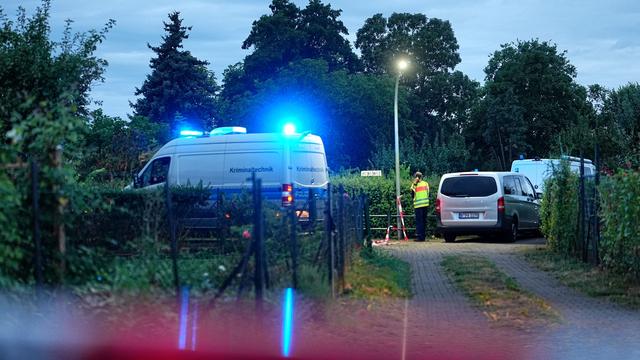
Berlin CSD Attack Suspect Dead; Questions Swirl Over His Freedom
Translated from German, summarized and contextualized by DistantNews.
At a glance
News
Named sources
Outcome reported
- The suspect in the Berlin CSD attack, Abdul B., died during a police operation.
- Questions are being raised about why he was free despite a criminal record and known extremist sympathies.
- Authorities are investigating the circumstances that led to his previous sentence being suspended.
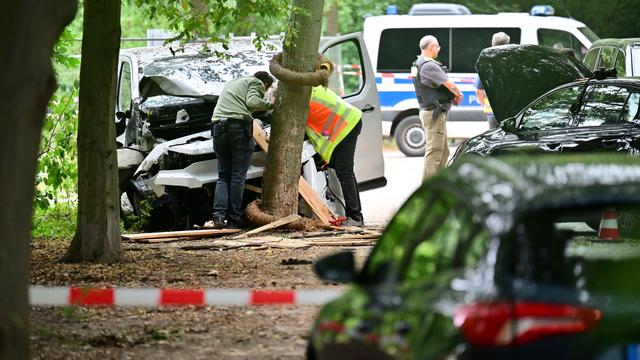
Berlin is grappling with the aftermath of an attack at the Christopher Street Day (CSD) parade, which left the suspected perpetrator, identified as Abdul B., dead during a police operation in Spandau. The incident has intensified demands for accountability and a thorough review of the judicial process.
We know that he committed a variety of offenses, that he sympathized with terror, and that there was also a conviction that was suspended, and the public prosecutor's office appealed against it.
Central to the public outcry is the question of why Abdul B. was not in custody. Federal Interior Minister Alexander Dobrindt highlighted that the suspect had a history of criminal offenses, sympathized with extremist groups, and had a previous conviction that was suspended. "We know that he committed a variety of offenses, that he sympathized with terror, and that there was also a conviction that was suspended, and the public prosecutor's office appealed against it," Dobrindt stated.
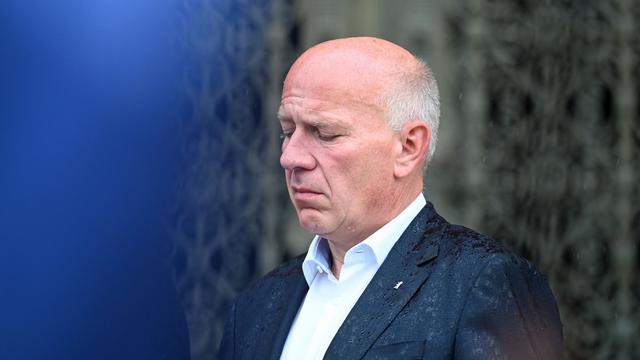
Both Dobrindt and Kai Wegner, the Governing Mayor of Berlin, expressed bewilderment at the lenient treatment of Abdul B. by the justice system. Wegner noted that the suspect was sentenced under juvenile law, and the court issued a suspended sentence, a decision he found difficult to comprehend. The German-Lebanese 21-year-old was reportedly killed while police attempted to arrest him. He had previously been detained in November 2025 after returning to Germany, having failed in attempts to join the Islamic State (IS) in Syria. After a period of pre-trial detention, a juvenile court sentenced him to 22 months, suspended for six months, for preparing a serious act of violence endangering the state.
And in fact, the question is currently being asked in detail: how can a sentence be suspended for someone who is identified as a danger. This is also being investigated in detail.
The public prosecutor's office had appealed this sentence, seeking a harsher penalty, and a detention order had been in place until the court lifted it, deeming pre-trial detention solely for securing the trial and not as a preliminary punishment. The conviction was not yet legally binding at the time of his death.
And then unfortunately, the court issued a suspended sentence. And I don't want to judge that, that is the independence of the judiciary, but I am speechless.
DistantNews Editorial
Originally published by Die Zeit in German. Translated, summarized, and contextualized by our editorial team with added local perspective. Read our editorial standards.
More Stories

From Our Blog

What Gets Lost (and Found) When News Is Translated

How the Same Story Looks Different in Different Countries

The Critical Role of Diaspora Media in Global News

What Travellers Should Know About Countries with Restricted Press

A Digital Nomad's Guide to Following Local News
