


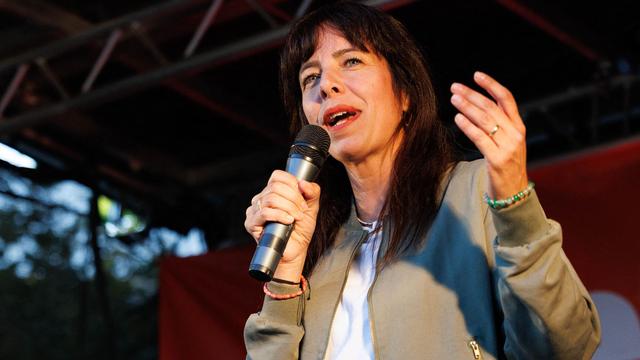

Berlin election: Young voters press parties on how they would fund their plans
Translated from German and summarized by DistantNews. Read the original for the full story.
At a glance
News
Named sources
Context piece
- Berlin parties answered questions from young voters ahead of the September 20 state election, in which 16- and 17-year-olds can vote for the first time.
- Financing proposals on rents, transport and education drew particular attention from viewers.
- The parties split on issues including school gender policy, surveillance, public transport funding and housing-company expropriation, with CDU and AfD often aligned.
Berlin's political parties faced a young audience on rbb, and the recurring question was not only what they planned to do, but how they would pay for it. The event came shortly before the September 20 election to the Berlin House of Representatives, the first in which 16- and 17-year-olds will be able to vote.
Representatives from the CDU, SPD, Greens, Left, AfD and BSW answered questions on rents, mobility and education. Each had 30 seconds to respond. Across all three areas, viewers repeatedly returned to the financing of the parties' proposals.
virtually to zero
The candidates all supported expanding public transport, but offered different ways to fund it. CDU candidate Lucas Schaal pointed to the large number of fare evaders and backed a closed system with access barriers that he said could reduce fare evasion “virtually to zero” while generating more revenue. AfD candidate Alexander Bertram also supported access controls, citing safety and cleanliness. Left candidate Niklas Schenker called for higher taxes on millionaires, while SPD candidate Tamara Lüdke proposed a “moderate adjustment of the real estate transfer tax.” BSW candidate Alina Lindemann argued that Germany could quickly spend “billions on our war ministry,” leaving too little money elsewhere.
moderate adjustment of the real estate transfer tax
The divisions became clearer in yes-or-no questions at the end of the discussion. CDU and AfD candidates jointly supported banning gender-related instruction in schools, expanding surveillance in the city and increasing the Bundeswehr's presence at school information events. The SPD, Greens, Left and BSW rejected those positions.
The latter four parties supported expropriating large housing companies and creating women-only compartments on Berlin's BVG transit network, while CDU and AfD opposed both ideas. The camps divided differently on housing, where the BSW and AfD supported the proposal described in the article before the source text ended.
billions on our war ministry
About this summary
Originally published by Die Zeit in German. Translated, summarized, and contextualized automatically by DistantNews, with a note on how the source frames the story. Not individually reviewed before publishing. How this works.
More Stories



From Our Blog

News in Translation: What Gets Lost, and How We Keep the Framing

The Same Story, Different Countries: How Coverage Changes at the Border

Diaspora Media: How Communities Follow News From Home

Traveling Where the Press Is Not Free: How to Read the News There

The Digital Nomad's Guide to Local News
