


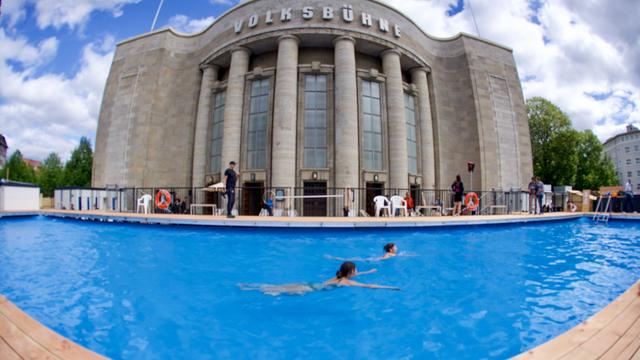
Berlin's Volksbühne Theater Becomes Public Pool in Protest Against City Decay
Translated from German, summarized and contextualized by DistantNews.
At a glance
News
From a news agency
Context piece
- Berlin's Volksbühne theater has opened a temporary outdoor swimming pool in front of its building.
- The 25-meter pool, complete with changing rooms and lifeguards, is intended as a protest against the city's decaying infrastructure and lack of public swimming facilities.
- The project, costing around 300,000 euros, aims to attract new audiences and highlight social issues, though some politicians question the expense.
Berlin's iconic Volksbühne theater has transformed its forecourt into a temporary public swimming pool, a bold move by new director Matthias Lilienthal. The 25-meter pool, featuring a snack bar and lifeguard service, opened Friday, offering a splash of relief amidst the capital's perceived infrastructure decay and a shortage of public swimming options.
We are very pleased that we can relieve the swimming pool shortage a little bit for two months.
Lilienthal described the initiative as a protest against the city's failing infrastructure and a way to address the "swimming pool deficit." He stated in early summer that the project would "relieve the swimming pool shortage a little bit for two months." The pool is free to enter, with timed tickets bookable online, and is also envisioned as a welcoming gesture to the local neighborhood.
I would have wished for the money for the small venues, especially youth theater.
The ambitious summer spectacle, costing approximately 300,000 euros funded by the theater's budget, mirrors the expense of a major theater production. While the theater receives over 20 million euros in annual subsidies, the project has drawn criticism. SPD politician Dunja Wolff suggested the funds could have been better allocated to small venues or youth theater, arguing that "filling seats at performances should be prioritized" over fulfilling the "dream of a swimming master."
Instead of fulfilling the dream of the swimming master, the seats at performances should be filled.
This unconventional approach aligns with the Volksbühne's history of provocative artistic statements. The theater, a significant cultural institution in Germany, saw its previous director Frank Castorf revolutionize stage productions. After a period of turmoil and failed leadership transitions, Lilienthal, a seasoned theater director with experience at Berlin's HAU and Munich's Kammerspiele, now leads the venue. His tenure officially begins in October, but this summer splash is already generating significant buzz, with Lilienthal emphasizing its role in highlighting social issues and attracting those who might not typically visit the theater.
The whole city is already talking about the Volksbad.
DistantNews Editorial
Originally published by Die Zeit in German. Translated, summarized, and contextualized by our editorial team with added local perspective. Read our editorial standards.
More Stories



From Our Blog

What Gets Lost (and Found) When News Is Translated

How the Same Story Looks Different in Different Countries

The Critical Role of Diaspora Media in Global News

What Travellers Should Know About Countries with Restricted Press

A Digital Nomad's Guide to Following Local News
