


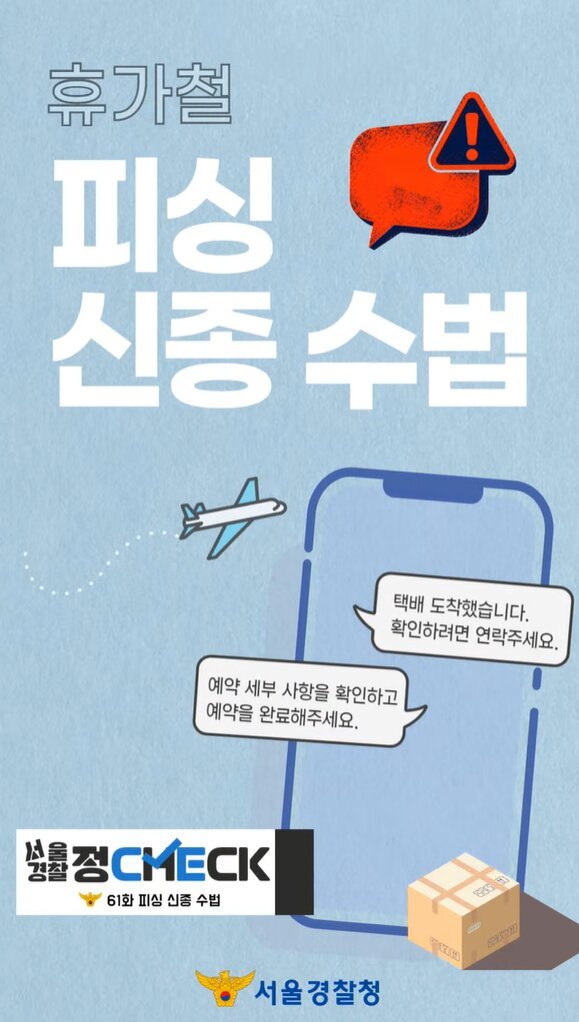
Beware 'Lost Passport' Calls: Police Warn of New Phishing Scams Targeting Summer Travelers
Translated from Korean, summarized and contextualized by DistantNews.
At a glance
News
Official statement
Ongoing story
- Police warn of new phishing scams targeting summer travelers and package recipients.
- Scammers impersonate airport lost-and-found staff, claiming to hold lost passports and demanding personal information.
- Another scam involves fake delivery notifications prompting users to call phishing numbers for package details.
As the summer travel season peaks, South Korean police are issuing a stern warning about a rise in sophisticated phishing schemes targeting international travelers and individuals using delivery services. The Seoul Metropolitan Police Agency highlighted these evolving threats and preventative measures in a YouTube video posted on July 31.
One prevalent scam involves criminals posing as airport lost-and-found personnel. They contact potential victims, falsely claiming to have found their lost passport. If the victim denies ever having a passport, the scammer raises alarm by suggesting a fake passport might have been created in their name. This fabricated anxiety is then used to pressure the victim into calling a specific number, thereby revealing personal information.
Police emphasize that inquiries about lost or found identification, including passports, should be verified directly through official government channels like the Government24 portal or the Ministry of Foreign Affairs' passport information website. They stress that public institutions will never solicit personal information over the phone or demand immediate reporting through unsolicited calls.
Another common tactic exploits the high volume of package deliveries during busy periods. Scammers send text messages accompanied by photos of packages left at a recipient's door, urging them to call a number for confirmation. This call invariably connects to a phishing operation designed to steal information. Authorities strongly advise verifying any delivery-related notifications exclusively through official apps or customer service hotlines.
DistantNews Editorial
Originally published by Dong-A Ilbo in Korean. Translated, summarized, and contextualized by our editorial team with added local perspective. Read our editorial standards.
More Stories



From Our Blog

What Gets Lost (and Found) When News Is Translated

The Critical Role of Diaspora Media in Global News

What Travellers Should Know About Countries with Restricted Press

A Digital Nomad's Guide to Following Local News

How the Same Story Looks Different in Different Countries
