


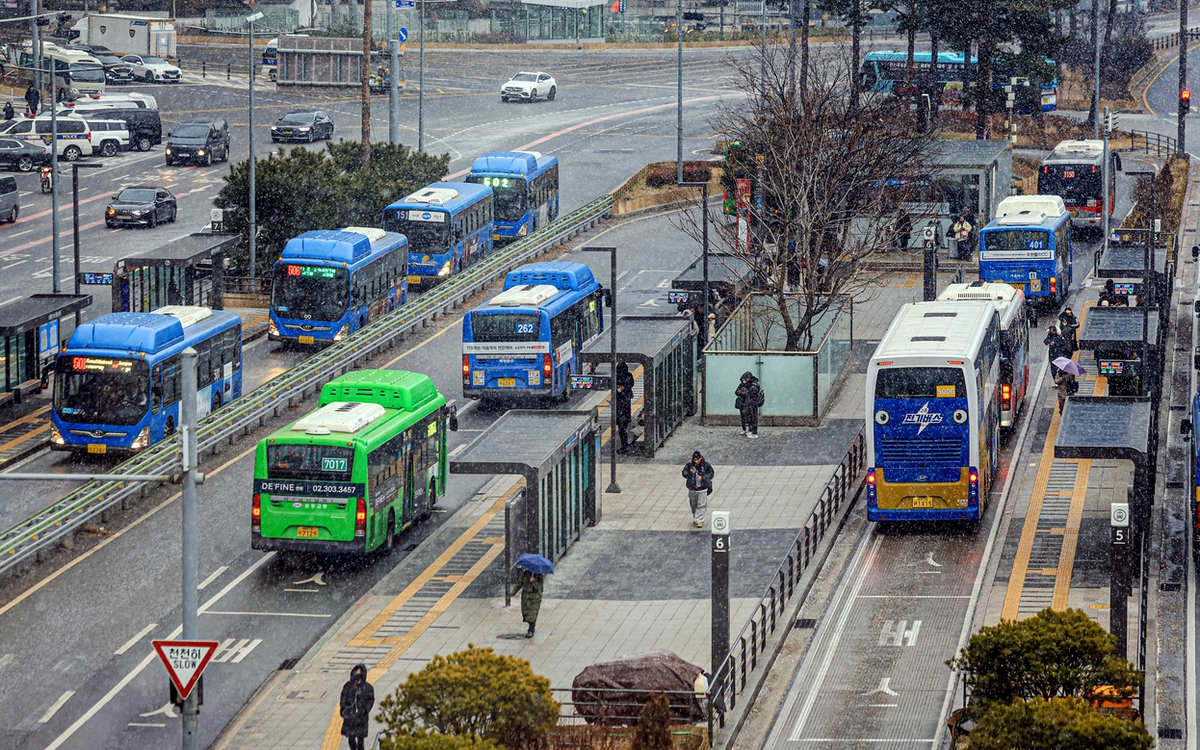
Beyond Free Fares: Seoul's Bus System Offers Lessons for Ho Chi Minh City
Translated from Vietnamese, summarized and contextualized by DistantNews.
TLDR
- Ho Chi Minh City plans to launch a free bus policy, a bold move to encourage public transport use.
- To shift citizens from private vehicles to buses, comprehensive solutions and improved system quality are necessary beyond just free fares.
- Seoul's bus system offers a model with its extensive network, color-coded routes, frequency-based scheduling, and dedicated bus lanes.
Ho Chi Minh City's upcoming free bus policy represents a significant and commendable step towards enhancing public transportation. However, as the article "Nhìn từ Seoul, xe buýt TP.HCM cần gì ngoài miễn phí?" (Looking from Seoul, what does HCMC's bus system need besides being free?) published in Tuổi Trẻ Online suggests, simply making buses free might not be enough to convince citizens to abandon their private vehicles. A truly effective system requires a holistic approach, focusing on quality, efficiency, and user experience.
The article draws valuable lessons from Seoul, South Korea, a city renowned for its highly efficient and integrated public transport system. Seoul's bus network is not merely a supplementary service but a core component of the city's mobility, running parallel to the subway system. This integration ensures seamless travel, allowing passengers to connect easily from subway stations to bus routes, creating a continuous flow that encourages ridership.
Key takeaways from Seoul's success include a sophisticated route organization system, where buses are color-coded to signify their function (e.g., blue for main routes, green for feeder routes, yellow for downtown circulation). This visual cue simplifies navigation for passengers. Furthermore, the numbering system follows a logical pattern indicating origin and destination zones. Unlike fixed schedules, Seoul's buses operate on a frequency-based model, with buses arriving every 5-10 minutes during peak hours and slightly longer intervals during off-peak times. Real-time GPS tracking allows passengers to monitor bus locations, reducing the perceived wait time and enhancing convenience.
Perhaps most critically, Seoul implements dedicated bus lanes located in the median of the road, separating buses from general traffic. This separation prevents delays caused by congestion, ensuring stable speeds and predictable arrival times. For Ho Chi Minh City, adopting such integrated planning, user-centric design, and dedicated infrastructure could transform its bus system from a basic necessity into a preferred mode of transport, truly complementing the free fare initiative.
DistantNews Editorial
Originally published by Tuổi Trẻ in Vietnamese. Translated, summarized, and contextualized by our editorial team with added local perspective. Read our editorial standards.
More Stories

From Our Blog

What Gets Lost (and Found) When News Is Translated

The Critical Role of Diaspora Media in Global News

What Travellers Should Know About Countries with Restricted Press

A Digital Nomad's Guide to Following Local News

How the Same Story Looks Different in Different Countries
