


Beyond the Pulp: Mandarin Leaves and Peels Offer Surprising Uses
Translated from Spanish, summarized and contextualized by DistantNews.
At a glance
News
Sources not specified
Context piece
- Mandarin leaves and peels offer practical uses beyond discarding them after consumption.
- Mandarin leaves can be used for calming teas, while peels mixed with white vinegar create a natural cleaning solution.
- Reusing organic waste aligns with growing interest in sustainable household solutions.
Mandarin fruit, a global favorite, often comes with attached leaves or small branches. While these are typically discarded, popular and domestic uses reveal that both the leaves and peels have practical applications after the pulp is consumed. These uses range from preparing infusions to creating ecological cleaning products.
Although the usual practice is to discard these elements, various popular and domestic uses show that both leaves and peels have practical utilities after consuming the pulp, ranging from preparing infusions to making ecological cleaning products.
The leaves of the mandarin tree (Citrus reticulata Blanco) are green and shiny, releasing a fresh, citrusy aroma when crushed. This scent lends itself to homemade teas and infusions. In traditional folk medicine, this drink is associated with calming or antispasmodic effects, a use also noted in research from the Federal University of Alfenas in Brazil. However, specialists clarify that traditional use does not equate to scientifically proven medical treatment; it should be viewed as a popular aromatic beverage, not a cure.
The leaves of the mandarin are usually used for teas and infusions.
The fruit's peel offers a functional alternative for household chores. When combined with white vinegar, it forms a multipurpose cleaner with disinfectant, degreasing, and repellent properties. White vinegar is known for its cleaning efficacy, but its strong odor can be a drawback. Adding mandarin peels softens the fragrance and incorporates the citrus's essential oils.
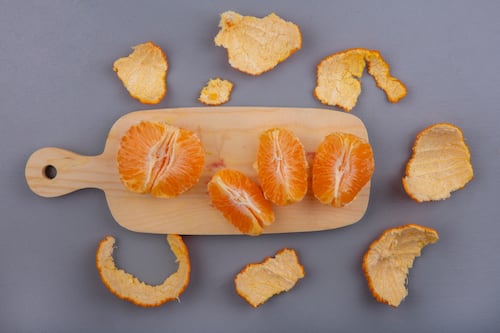
Reusing mandarin peel for cleaning is a simple way to give this citrus fruit a second use.
This homemade mixture is ideal for cleaning kitchens, bathrooms, and general surfaces, effectively degreasing stovetops and extractor hoods. It also helps eliminate odors in trash cans or enclosed spaces, and its scent acts as a natural repellent against common insects like flies and ants. The reuse of these organic residues aligns with a growing interest in sustainable household solutions.
This homemade mixture is ideal for cleaning kitchens, bathrooms, and general surfaces, acting effectively as a degreaser on stoves and extractor hoods.
DistantNews Editorial
Originally published by El Universal in Spanish. Translated, summarized, and contextualized by our editorial team with added local perspective. Read our editorial standards.
More Stories



From Our Blog

What Press Freedom Means for the News You Read

What Gets Lost (and Found) When News Is Translated

The Critical Role of Diaspora Media in Global News

What Travellers Should Know About Countries with Restricted Press

A Digital Nomad's Guide to Following Local News
