

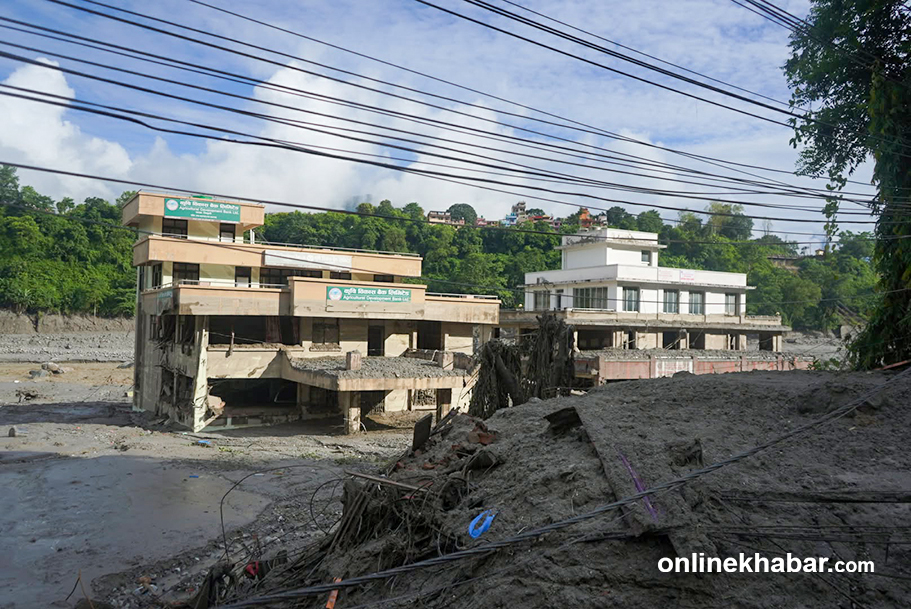

Bhotekoshi flood survivors face a new battle against illness
Translated from English and summarized by DistantNews. Read the original for the full story.
At a glance
News
Named sources
Ongoing story
- Flood survivors in Nepal’s Rasuwa district face shortages of medicines and disrupted access to health services after roads were cut off.
- Vulnerable people, including infants, pregnant women, elderly residents and tuberculosis patients, are struggling to obtain essential treatment.
- Crowded shelters and inadequate sanitation are increasing concerns about viral fever and diarrhoeal disease.
For survivors who escaped the Bhotekoshi flood with their lives, the emergency has shifted from rescue to survival without basic healthcare. Roads remain cut off, health services have been disrupted and medicines are running short across affected areas.
At a temporary shelter in Laharepauwa, 26-year-old Ranjina Tamang is caring for her four-month-old son, who has had a fever since Saturday. More than 150 people are staying at Shivalaya Basic School in Uttargaya Rural Municipality. Health workers examined the baby and listed medicines, but Tamang said she had no money to buy them and no practical way to reach a market.
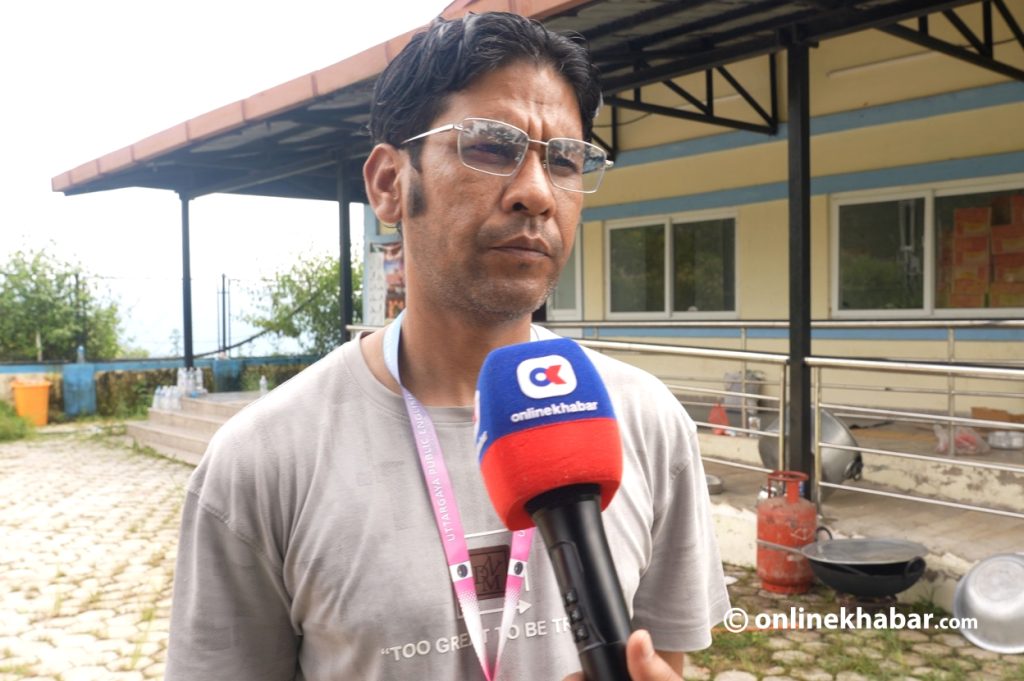
Her difficulties are shared by pregnant women, new mothers, elderly people and patients with chronic illnesses. Some lost their medicines when floods swept away their homes. Others no longer have prescriptions or cannot remember the names of the drugs they were taking. Ram Raja Bhandari, head of the health section at Bidur Municipality, said the shortage was especially worrying for tuberculosis patients because their treatment should not be interrupted.
I don't have even one rupee. How am I supposed to buy the medicine?
Shelter conditions are adding to the danger. At Shivalaya Basic School, 30 people share one room and only two toilets serve the camp. When the toilets are crowded, some residents relieve themselves outdoors, increasing the risk of contaminated water and diarrhoeal disease. A viral fever has also been reported in Pipaltar near Devighat, while people who lost relatives are showing signs of psychological distress.
Ranjina sleeps on a mat with her baby. She has received a bedsheet, and the camp provides meals morning and evening, with noodles, biscuits and fruit drinks distributed during the day. Her baby continues to cry, possibly because she is struggling to produce enough breast milk, while her aunt also has a fever. At Trishuli Hospital, daily attendance has fallen from about 700 patients before the flood to just five to 10, a decline that reflects the collapse of access rather than an end to illness.
Many people don't even know which medicines they were taking. They know the name of their illness, but not the name of the medicine.
About this summary
Originally published by Kathmandu Post in English. Translated, summarized, and contextualized automatically by DistantNews, with a note on how the source frames the story. Not individually reviewed before publishing. How this works.
More Stories

From Our Blog

What Gets Lost (and Found) When News Is Translated

The Critical Role of Diaspora Media in Global News

What Travellers Should Know About Countries with Restricted Press

A Digital Nomad's Guide to Following Local News

How the Same Story Looks Different in Different Countries
