


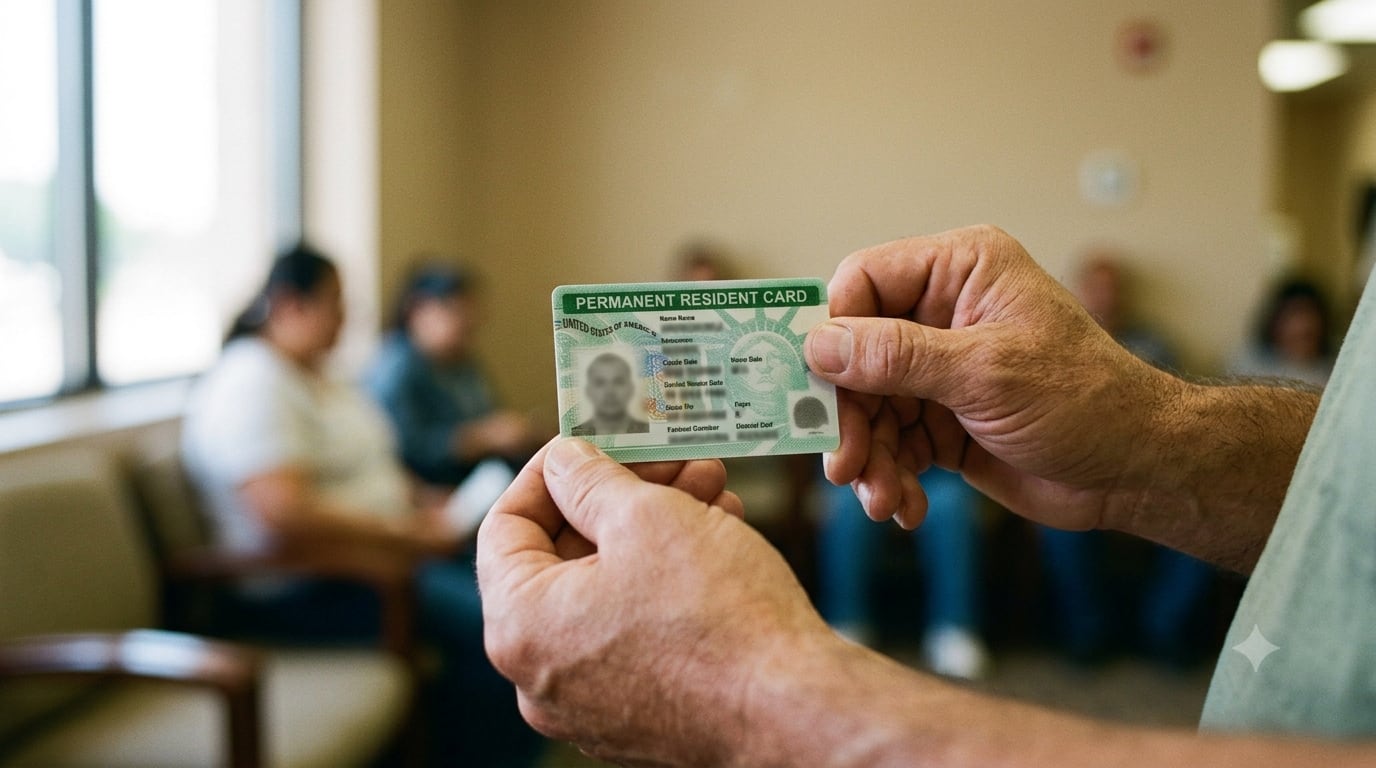
“Blank check” for Trump: Supreme Court leaves green card residents in limbo
Translated from Spanish, summarized and contextualized by DistantNews.
At a glance
News
Named sources
In the courts
- The U.S. Supreme Court has validated a practice that could create uncertainty for permanent residents returning from abroad.
- The ruling allows border agents to treat green card holders as applicants for admission, even without a conviction at the time of return.
- This decision potentially grants the government broader power to scrutinize returning residents, raising concerns about prolonged legal limbo.
A recent U.S. Supreme Court decision has potentially placed green card holders in a precarious new position, allowing immigration authorities broader discretion when they return to the United States after traveling abroad. The ruling validates a practice where border agents can treat lawful permanent residents as if they are seeking admission, even if they have no conviction at the time of their return.
The case centered on Muk Choi Lau, a green card holder for nearly two decades, who faced an accusation of selling counterfeit goods. While his case was ongoing and before any conviction, Lau made a brief trip to China. Upon his return to the U.S., he was interrogated by a border agent. Instead of being formally admitted, he was granted temporary permission to stay, known as "parole," his physical green card was confiscated, and he remained in this status for years.
After Lau was eventually convicted of counterfeiting, authorities initiated deportation proceedings. They argued that his departure and subsequent return subjected him to more severe expulsion grounds than if he had never left the U.S. The Supreme Court's conclusion affirmed the government's actions as legal, thereby endorsing this procedure used by immigration authorities.
Critics, including Justice Ketanji Brown Jackson in her dissent, argue that this ruling provides the government with a "blank check." The concern is that individuals could be left in a state of legal uncertainty for years, facing more severe immigration consequences simply for leaving the country temporarily, even without a firm conviction at the time of their return. The American Immigration Council suggests this precedent could be used by any administration to expand such powers over permanent residents.
blank check
DistantNews Editorial
Originally published by La Nación in Spanish. Translated, summarized, and contextualized by our editorial team with added local perspective. Read our editorial standards.
More Stories



From Our Blog

What Gets Lost (and Found) When News Is Translated

The Critical Role of Diaspora Media in Global News

What Travellers Should Know About Countries with Restricted Press

A Digital Nomad's Guide to Following Local News

How the Same Story Looks Different in Different Countries
