


Blockade succeeds where sanctions failed as Iran oil exports stall
Summarized by DistantNews. Read the original for the full story.
At a glance
Newswire
Named sources
Ongoing story
- Iran has gone about seven weeks without meaningful crude exports through the Strait of Hormuz, according to shipping analysts cited by Reuters.
- Estimates put Iran’s August crude and condensate loadings at 220,000 to 255,000 barrels per day, down from about 740,000 barrels per day in July and 2 million in March.
- The export collapse is squeezing Tehran’s foreign-currency income, while dozens of Iran-linked tankers remain inside or beyond the U.S. blockade zone.
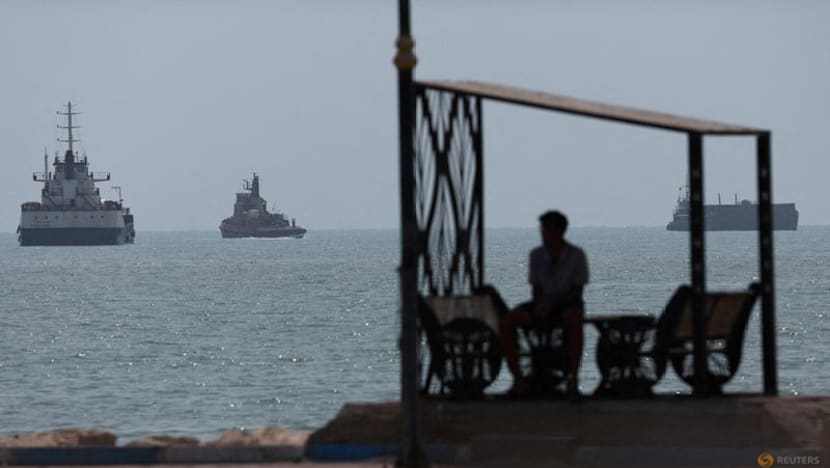
Iran has gone about seven weeks without shipping meaningful crude exports through the Strait of Hormuz, according to shipping data firms cited by Reuters. The disruption has cut off the main route to China, Tehran’s only major remaining oil customer, and is draining a key source of foreign-currency income.
The current U.S. naval blockade has had a sharper effect than earlier sanctions campaigns, when Iranian oil continued to reach buyers despite restrictions. Since Washington reinstated the blockade on July 14, no Iranian crude cargoes have successfully transited the strait to China, according to Kpler, Vortexa and TankerTrackers.com.
Iran can still sell oil from floating storage in Asia, but it cannot replenish those supplies while crude accumulates on tankers inside the strait. Vortexa and Kpler estimate that Iran loaded between 220,000 and 255,000 barrels per day of crude and condensate in August, compared with roughly 740,000 barrels per day in July and about 2 million barrels per day in March.
Kpler analyst Homayoun Falakshahi said the loss of export income could force Tehran to finance spending by printing money, adding to inflationary pressure. The International Monetary Fund estimates Iran’s inflation rate will approach 70% this year, the world’s third-highest after Venezuela and Sudan.
TankerTrackers.com co-founder Samir Madani said 29 tankers carrying 36.11 million barrels of crude remain inside the strait. The blockade operates south of Iran, between the Gulf of Oman and the Arabian Sea, where U.S. Navy vessels check ships approaching or leaving Iranian ports. Beyond that zone, Blackstone Compliance Services said 51 Iran-linked shadow-fleet tankers were operating in the Gulf of Oman and another 81 were delivering in Asia or waiting off Malaysia. Reuters said it could not independently verify those figures.
Even at the height of maximum-pressure sanctions in 2019-20, some Iranian crude cleared Hormuz every single month; at no point did outbound flows fall to near-zero for a sustained stretch as they have since mid-July.
About this summary
Originally published by The Straits Times. Summarized and contextualized automatically by DistantNews, with a note on how the source frames the story. Not individually reviewed before publishing. How this works.
More Stories

From Our Blog

What Gets Lost (and Found) When News Is Translated

The Critical Role of Diaspora Media in Global News

What Travellers Should Know About Countries with Restricted Press

A Digital Nomad's Guide to Following Local News

How the Same Story Looks Different in Different Countries
