

Bloomberg defamation case: Freedom of expression does not extend to false, defamatory allegations, say Shanmugam and Tan See Leng
Summarized and contextualized by DistantNews.
At a glance
News
Named sources
Outcome reported
- Singaporean ministers K Shanmugam and Tan See Leng rejected claims that their defamation suit against Bloomberg was an attack on press freedom.
- They stated that freedom of expression does not permit publishing false and defamatory allegations without basis, a principle reaffirmed by the court.
- The ministers criticized Bloomberg's response to the ruling, urging the news organization to address the court's findings rather than merely stating its reporting was accurate.
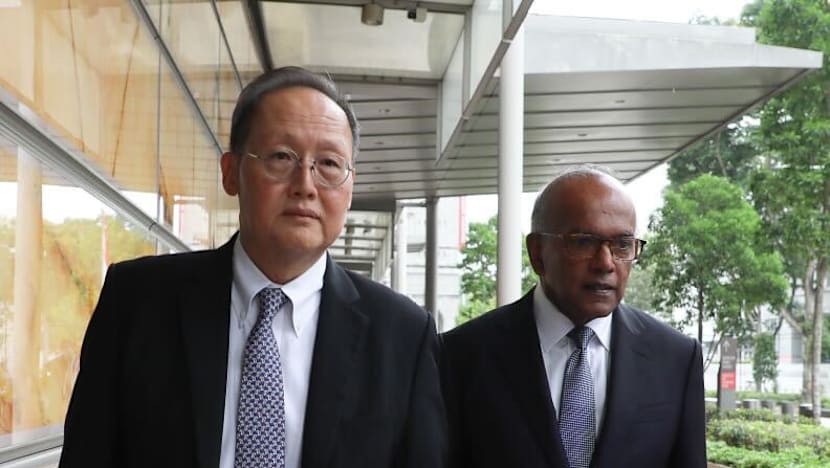
Singapore's Home Affairs Minister K Shanmugam and Manpower Minister Tan See Leng have firmly stated that freedom of expression does not extend to publishing false and defamatory allegations without factual basis. They issued this clarification on Friday, July 17, 2026, in response to suggestions that their successful defamation suit against Bloomberg infringed upon press freedom. Both ministers emphasized that this principle was "reaffirmed by the Court in this case."
Freedom of expression does not extend to publishing false and defamatory allegations without basis.
In a statement posted on Facebook, the ministers acknowledged Singapore's support for "robust journalism and vigorous public debate." However, they reiterated that freedom of expression carries inherent responsibilities. Addressing commentary, particularly from Western media, that defamation suits have a "chilling effect," they asserted that "Singapore’s experience does not bear this out."
Some commentators, particularly in the Western media, say that defamation suits have a 'chilling effect'. But Singapore’s experience does not bear this out.
The ministers specifically took issue with Bloomberg's reaction to the High Court's July 14 judgment. Bloomberg had stated it respected the court's decision while maintaining the accuracy of its reporting and the integrity of its reporters. The ministers found these positions "difficult to reconcile," arguing that true respect for a court's decision should involve addressing its findings. They suggested that without this, Bloomberg's professed commitment to accuracy and journalistic integrity would be undermined.
If Bloomberg truly respects the court's decision, then it should address the court's findings, as any responsible organisation should. Otherwise, Bloomberg's professed commitment to accuracy, editorial standards, public interest journalism, and journalistic integrity will ring hollow.
Shanmugam and Tan See Leng highlighted the court's "comprehensive and unequivocal" findings, which they stated included conclusions that Bloomberg had "maliciously defamed and deliberately targeted" them. They also noted the court found Bloomberg's claim of public interest was a "cover" for publishing baseless allegations. The ministers pointed to the court's finding that Bloomberg failed to meet standards of responsible journalism by publishing falsehoods and denying them a fair opportunity to respond, which formed the basis for the award of aggravated damages. They concluded by stating the case was not about press freedom but about whether a news organization can "maliciously target individuals, publish grave allegations founded on falsehoods, and deny those accused a fair opportunity to respond," a proposition the court rejected.
This case is not about freedom of the press. It is about whether a news organisation can maliciously target individuals, publish grave allegations founded on falsehoods, and deny those accused a fair opportunity to respond. The court held that it cannot.
DistantNews Editorial
Originally published by CNA. Summarized and contextualized by our editorial team with added local perspective. Read our editorial standards.
More Stories



From Our Blog

What Gets Lost (and Found) When News Is Translated

The Critical Role of Diaspora Media in Global News

What Travellers Should Know About Countries with Restricted Press

A Digital Nomad's Guide to Following Local News

How the Same Story Looks Different in Different Countries
