


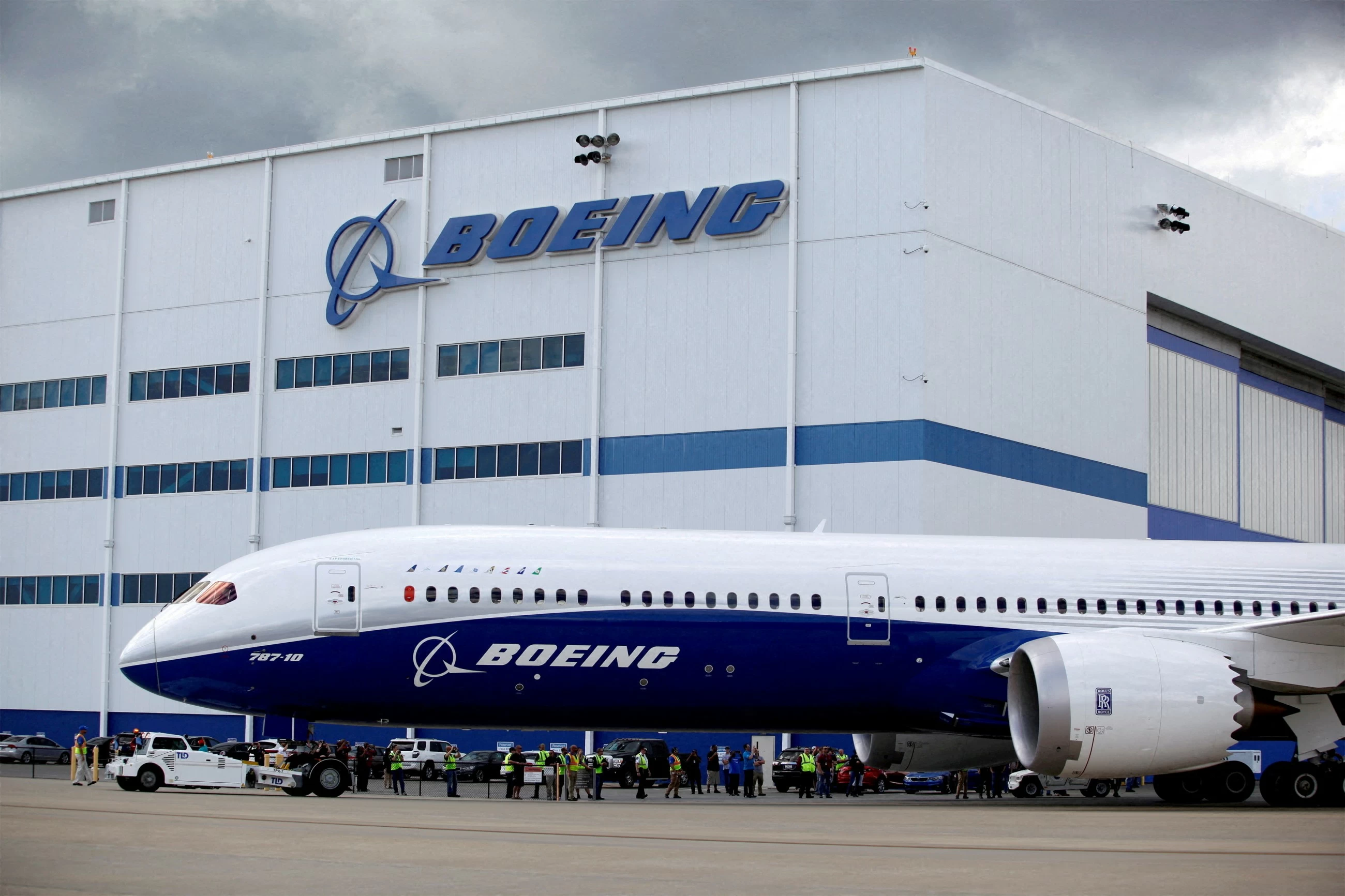
Boeing maintains 20-year forecast for strong global aircraft demand
Translated from English, summarized and contextualized by DistantNews.
At a glance
News
Sources not specified
New plan
- Boeing forecasts steady global demand for new commercial aircraft over the next 20 years, projecting 43,625 deliveries from 2026 through 2045.
- The US planemaker's outlook remains largely unchanged from its previous forecast, despite European rival Airbus trimming its projection slightly.
- Boeing anticipates a significant undersupply of aircraft, particularly single-aisle jets, due to manufacturing capacity and supply chain constraints.
Boeing has maintained its 20-year forecast for global demand for new commercial aircraft, projecting a need for 43,625 new jetliners and freighters between 2026 and 2045. This outlook, released ahead of the Farnborough Airshow, closely mirrors its 2025 projection. The forecast anticipates 33,545 single-aisle jets, 7,715 widebody aircraft, 930 freighters, and 1,435 regional jets will be delivered worldwide.
While Boeing's European competitor, Airbus, recently reduced its own forecast by 1%, citing geopolitical tensions and trade disputes, Boeing's projection remains steady. The US manufacturer expects air passenger traffic to grow by approximately 2.3% this year, a slowdown from last year's 5.3% but projected to rebound to 6%-7% in 2027 and 5%-6% in 2028. Boeing anticipates overall passenger traffic growth of 4% annually over the next two decades, with cargo traffic rising 3.7%.
Our outlook is that passenger traffic globally will be where it would have been by the end of 2028.
The company highlights a persistent undersupply of aircraft, estimating a deficit of nearly 2,000 planes by 2026. Shortages in single-aisle jets are expected to continue until the end of the decade, with widebody aircraft shortages persisting into the early 2030s. This demand is driven by both the replacement of older aircraft and fleet expansion, with Boeing projecting 21,475 deliveries for replacements and 22,150 for growth. The global fleet is expected to expand from about 28,000 aircraft in 2025 to 50,000 by 2045.
China is expected to lead demand, accounting for 21% of deliveries, followed by Eurasia (20%), North America and South/Southeast Asia (19% each). The forecast acknowledges market recovery but remains constrained by manufacturing capacity and supply-chain fragility. Boeing also faces certification delays for key programs like the 737 MAX 7 and 10, and the 777-9. Despite these challenges, Boeing Commercial Marketing Vice President Darren Hulst stated that long-term demand is supported by fundamental drivers like trade, tourism, and airline network expansion.
The reason why we travel and the reason why goods move isn’t changing.
DistantNews Editorial
Originally published by Gulf Today in English. Translated, summarized, and contextualized by our editorial team with added local perspective. Read our editorial standards.
More Stories


From Our Blog

What Gets Lost (and Found) When News Is Translated

The Critical Role of Diaspora Media in Global News

What Travellers Should Know About Countries with Restricted Press

A Digital Nomad's Guide to Following Local News

How the Same Story Looks Different in Different Countries
