


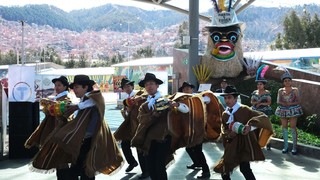
Bolivia's iconic 'moreno' mask displayed in La Paz park
Translated from Spanish, summarized and contextualized by DistantNews.
At a glance
News
Sources not specified
Context piece
- A large mask representing a 'moreno' figure, a symbol of Bolivian folklore, has been permanently installed in a public park in La Paz.
- The mask is part of an initiative to bring cultural heritage and art to public spaces and commemorates the 'morenada' dance, recognized by UNESCO.
- The 'morenada' dance, originating from the colonial era, depicts the hardships of enslaved Africans brought to Bolivia.
La Paz has unveiled an iconic 'moreno' mask, a significant symbol of Bolivian folklore, in a bustling urban park. This installation is part of a program aimed at making cultural heritage and art accessible in public spaces.
This work will be permanently in the park so that it can be known and visited by the national public and by the different delegations of foreigners who travel the cable car line.
The mask, now a permanent fixture at the Park of Cultures and Mother Earth, represents the 'moreno' character from the 'morenada' dance. This dance is one of the main attractions of the Festivity of Señor Jesús del Gran Poder, which UNESCO declared Intangible Cultural Heritage of Humanity in 2019. The 'morenada' dance itself is a historical reenactment, portraying the difficult lives of enslaved Africans brought to the Bolivian highlands during the colonial period.
Crafted by the Condori family, known for their decades-long tradition of creating folkloric masks, this particular piece depicts a colonial-era 'moreno' with a long white beard and prominent eyes. The dance's characteristic slow, sideways steps are said to represent the physical exhaustion of these enslaved individuals working in the mines of Potosí and later in the Yungas region.
The 'morenada' is the exhaustion of the Africans who arrived at the mines of Potosí and who could not adapt and who (later) settled in the Yungas.
While the 'moreno' mask is a key element of Bolivian cultural expression, officials clarified that it does not represent the identity of Afro-Bolivian communities. This distinction is important for appreciating Bolivian heritage respectfully and celebrating the living cultural practices passed down through generations of mask artisans.
the face of the moreno 'is part of the historical and cultural evolution of Bolivia', but clarified that 'it does not constitute' an element with which Afro-Bolivian peoples identify.
DistantNews Editorial
Originally published by El Deber in Spanish. Translated, summarized, and contextualized by our editorial team with added local perspective. Read our editorial standards.
More Stories



From Our Blog

What Gets Lost (and Found) When News Is Translated

The Critical Role of Diaspora Media in Global News

What Travellers Should Know About Countries with Restricted Press

A Digital Nomad's Guide to Following Local News

How the Same Story Looks Different in Different Countries
