


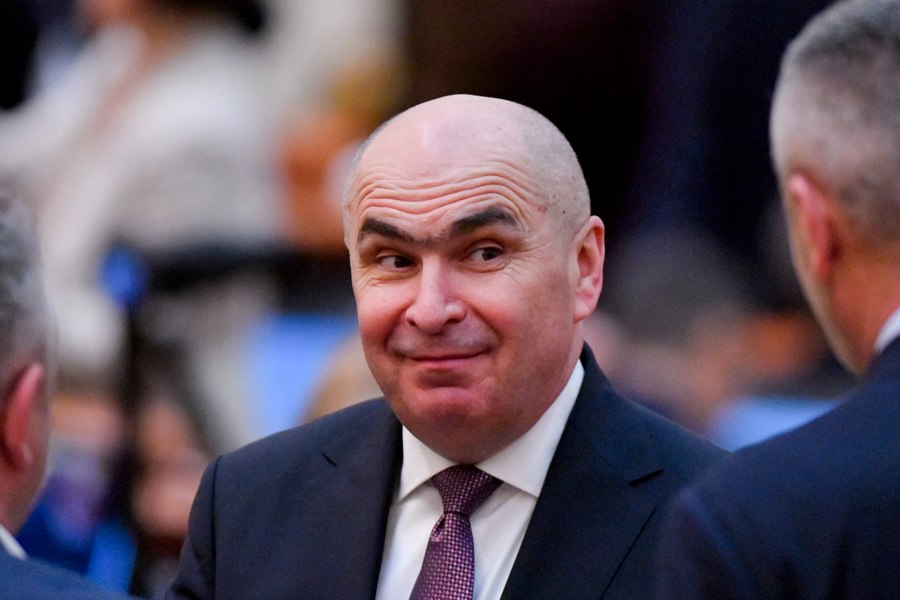
Bolojan blames PSD for salary law failure, warns of future risks
Translated from Romanian, summarized and contextualized by DistantNews.
At a glance
News
Named sources
Ongoing story
- Interim Prime Minister Ilie Bolojan expressed doubt that the PSD party will support the salary law project.
- Bolojan warned that without the law, responsible governments risk derailing salary expenditures in 2027 and 2028.
- He blamed the PSD for blocking the law, stating they made impossible promises to unions.
Interim Prime Minister Ilie Bolojan stated Tuesday evening that there is a low probability of the PSD party supporting the proposed salary law, despite his belief that it is a good project for Romania. He warned that without the law, future responsible governments risk derailing salary expenditures in 2027 and 2028.
The more hours pass, the lower the probability that we will have the project approved by Monday. Seeing the PSD's statements, there is a small probability that they will support it, although it would be a good project for Romania.
Bolojan explained that his government explored all possible avenues to advance the important legislation, including negotiations with the European Commission. He cautioned that failing to reach an agreement for the salary law to enter Parliament would pose a risk, not only concerning the potential loss of 770 million euros.
Without the salary law, we risk that in 2027 and 2028 responsible governments will again derail salary expenditures.
The interim prime minister attributed the current deadlock to unrealistic promises made by the PSD over the years, particularly their tendency to applaud union demands. He cited the 2023 education strike, where previous governments made commitments that would have required an 8 billion euro allocation for education alone, exceeding the total 11 billion euro budget. Bolojan emphasized the need to be truthful with the public about economic limitations.
When you promise more than is possible – and the PSD has done this for years, when you applaud every union demand.
He specifically held the PSD responsible for blocking the salary law. Bolojan argued that if the law fails to pass, it will become increasingly difficult for future governments to avoid indexing salaries as budget pressures mount. This, he warned, would deepen existing inequalities through percentage-based increases and risk turning future governments into mere agencies for paying interest and social expenses, hindering Romania's development.
If the law does not pass, the PSD is responsible for the blockage.
DistantNews Editorial
Originally published by Adevărul in Romanian. Translated, summarized, and contextualized by our editorial team with added local perspective. Read our editorial standards.
More Stories


From Our Blog

What Gets Lost (and Found) When News Is Translated

The Critical Role of Diaspora Media in Global News

What Travellers Should Know About Countries with Restricted Press

A Digital Nomad's Guide to Following Local News

How the Same Story Looks Different in Different Countries
