


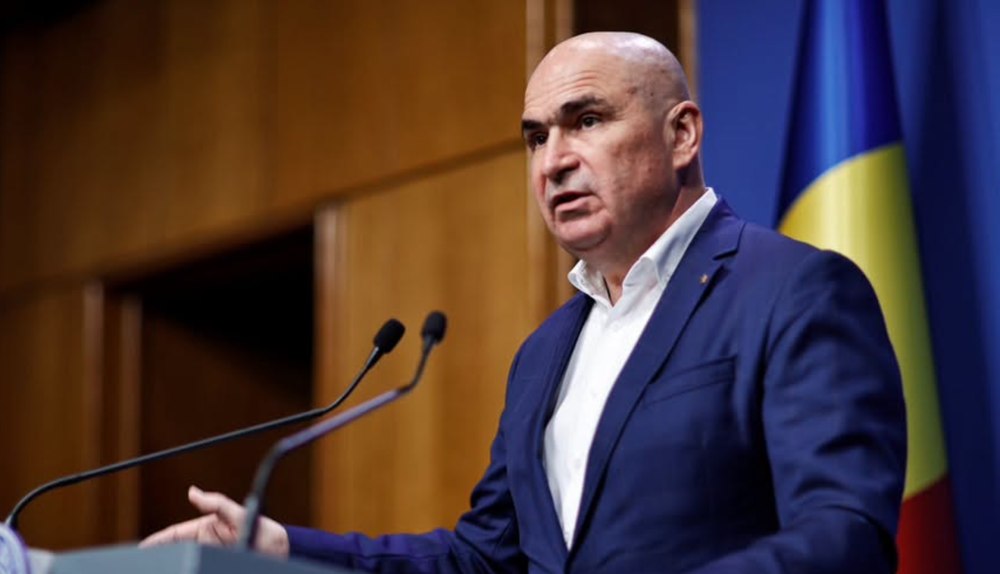
Bolojan highlights PNRR achievements and accuses PSD of sabotaging pay reform law
Translated from Romanian and summarized by DistantNews. Read the original for the full story.
At a glance
News
Official statement
Approved/passed
- Interim Prime Minister Ilie Bolojan said Romania had completed one of its most important development programs, the EU-backed National Recovery and Resilience Plan.
- He cited investments including the Moldavia Motorway, energy renovations, government cloud infrastructure, renewable energy, schools, health care and social housing.
- Bolojan said Romania had absorbed more than 90% of available grants and over 95% of loans, while accusing the PSD of sending an anti-reformist signal over the pay law.
Romania’s interim prime minister, Ilie Bolojan, presented the National Recovery and Resilience Plan as a broad investment program covering highways, public buildings, digital government, schools and hospitals. He also used the presentation to criticize the Social Democratic Party over a public-sector pay reform law, calling its position “an anti-reformist signal.”
At a government news conference, Bolojan highlighted the Moldavia Motorway, including 1.5 billion euros for the Focșani-Bacău section. He said more than 1.8 billion euros had gone toward energy renovations covering tens of thousands of buildings and more than 4.6 million square meters of residential and public space.
He also pointed to more than 300 million euros for a government cloud, which already connects over 30 public institutions, and more than 450 million euros for renewable energy projects totaling nearly 1,000 megawatts. Schools received 600 million euros for classroom and laboratory equipment, while more than 450 million euros supported vulnerable students in over 2,000 schools. Universities received more than 230 million euros for digitalization.
Yesterday we completed one of the most important plans for Romania’s development.
Bolojan listed additional funding for water and sewage networks, more than 300 million euros for afforestation, and health investments that included 1,200 ambulances, hospitals, neonatal intensive-care units and more than 2,000 family doctors’ offices. The plan also financed 885 homes for young people from marginalized communities.
He said Romania had absorbed more than 90% of its grants and over 95% of its loans, based on figures presented by the Ministry of European Projects. Bolojan described the projects as having a direct effect on daily life, while framing the dispute over the pay law as a test of the government’s reform agenda.
This is an anti-reformist signal.
About this summary
Originally published by Adevărul in Romanian. Translated, summarized, and contextualized automatically by DistantNews, with a note on how the source frames the story. Not individually reviewed before publishing. How this works.
More Stories



From Our Blog

What Gets Lost (and Found) When News Is Translated

The Critical Role of Diaspora Media in Global News

What Travellers Should Know About Countries with Restricted Press

A Digital Nomad's Guide to Following Local News

How the Same Story Looks Different in Different Countries
