


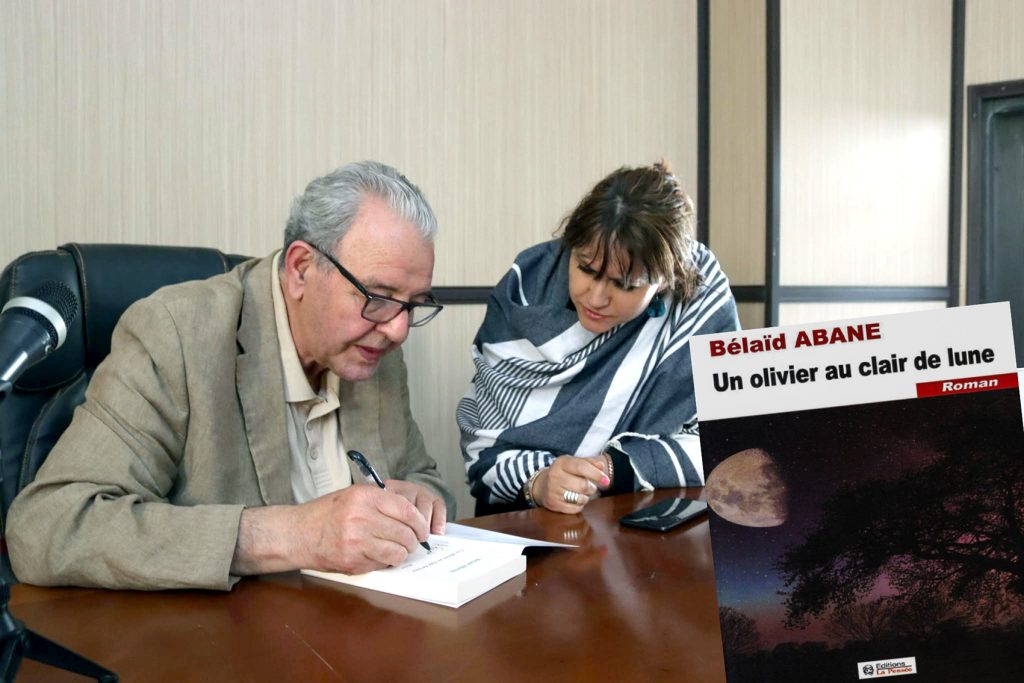
Book Release: Bélaïd Abane's 'An Olive Tree in the Moonlight' Intertwines Historical Reality and Imaginary
Translated from French, summarized and contextualized by DistantNews.
At a glance
In-depth
Sources not specified
Context piece
- Bélaïd Abane, a medical professor and historian, has published his second novel, "An Olive Tree in the Moonlight."
- The novel is set in the village of Izra and explores themes of historical reality, imagination, and the Algerian War of Liberation through the lens of childhood.
- The olive tree symbolizes resistance, perseverance, and family cohesion in Kabyle culture, while the moonlight adds an intangible, allegorical dimension.
Bélaïd Abane, a respected professor of medicine, researcher in history, and political scientist, has released his second novel, "An Olive Tree in the Moonlight." Abane, already known for six essays on the Algerian national movement and Revolution, transitions from non-fiction to fiction, deepening his exploration of historical events. The novel meticulously blends documentary rigor with fiction rooted in a concrete reality.
The narrative unfolds primarily around the village of Izra, where narrow streets become a vibrant stage for pervasive, underlying tension. Abane authentically recreates the daily life of rural Algeria amidst the transformations of time, evoking an atmosphere of diffuse fear and mystery. Whispers of impending revolt and the presence of "liberators at work" imbue the story with dramatic intensity, gradually shifting the everyday into the realm of history.
The novel adopts a resolutely anthropological, historical, and social approach. It depicts village life through the prism of the author's childhood during the War of National Liberation, lending it an authenticity that archival documents alone cannot replicate. The title itself, "An Olive Tree in the Moonlight," is programmatic, with both images forming the poetic core of the work.
In Kabyle society, the olive tree is not merely a tree; it embodies resistance, perseverance, and resilience. Its longevity and ability to regrow after fire symbolize family unity and cohesion, with olive harvesting serving as a communal dialogue. In the context of colonization and war, the olive tree represents quiet resistance, prefiguring the novel's major theme: fidelity to the land, ancestors, and self as a primary source of peaceful strength. The moonlight introduces an immaterial, allegorical dimension, a soft, diffuse nocturnal light that is felt but cannot be grasped, belonging to a different sensory register.
DistantNews Editorial
Originally published by El Watan in French. Translated, summarized, and contextualized by our editorial team with added local perspective. Read our editorial standards.
More Stories



From Our Blog

What Gets Lost (and Found) When News Is Translated

The Critical Role of Diaspora Media in Global News

What Travellers Should Know About Countries with Restricted Press

A Digital Nomad's Guide to Following Local News

How the Same Story Looks Different in Different Countries
