

Border controls between Spain and Gibraltar end after 118 years
Translated from German, summarized and contextualized by DistantNews.
At a glance
News
Sources not specified
Outcome reported
- Border controls between Spain and the British territory of Gibraltar have ended after 118 years, following an agreement between the EU and the UK.
- The closure of the border in 1969 by Spanish dictator Franco had significantly impacted the region's economy and tourism.
- The new agreement, linked to Brexit, aims to redefine the relationship and facilitate movement and economic activity.
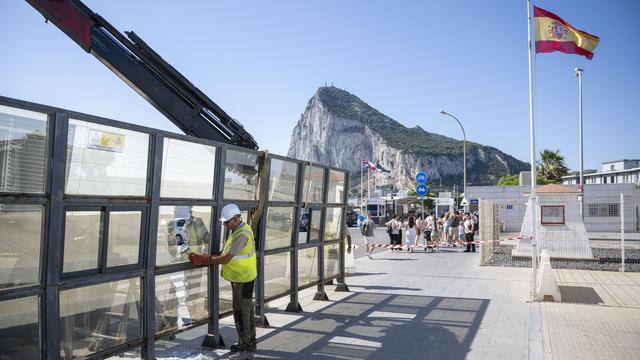
After more than a century, the border between Spain and the British territory of Gibraltar has opened, with controls ending on July 15, 2026. This change follows a new agreement between the European Union and Great Britain, effectively dismantling the barrier that has separated the two for 118 years.
The border's history is deeply intertwined with political tensions. A fence was erected in 1908, and relations soured significantly under Spanish dictator Francisco Franco. Following his death and Spain's transition to democracy, the border was eventually reopened. However, Franco had previously closed the border in May 1969, a move that profoundly affected Gibraltar's economy and its relationship with Spain.
Gibraltar's status as a British territory dates back to the Treaty of Utrecht in 1713, which ceded the peninsula to Great Britain during the War of the Spanish Succession. Spain made unsuccessful attempts to reclaim the territory in the 18th century. The inhabitants of Gibraltar have consistently voted to remain under British rule, with over 99 percent choosing British sovereignty in a 1967 referendum.
The new agreement, intrinsically linked to Brexit, seeks to establish a new framework for the relationship between Gibraltar and Spain. It is expected to have significant implications for people, the economy, and tourism in the region, aiming to facilitate movement and economic exchange after decades of separation and control.
DistantNews Editorial
Originally published by Die Zeit in German. Translated, summarized, and contextualized by our editorial team with added local perspective. Read our editorial standards.
More Stories

From Our Blog

What Gets Lost (and Found) When News Is Translated

How the Same Story Looks Different in Different Countries

The Critical Role of Diaspora Media in Global News

What Travellers Should Know About Countries with Restricted Press

A Digital Nomad's Guide to Following Local News
