


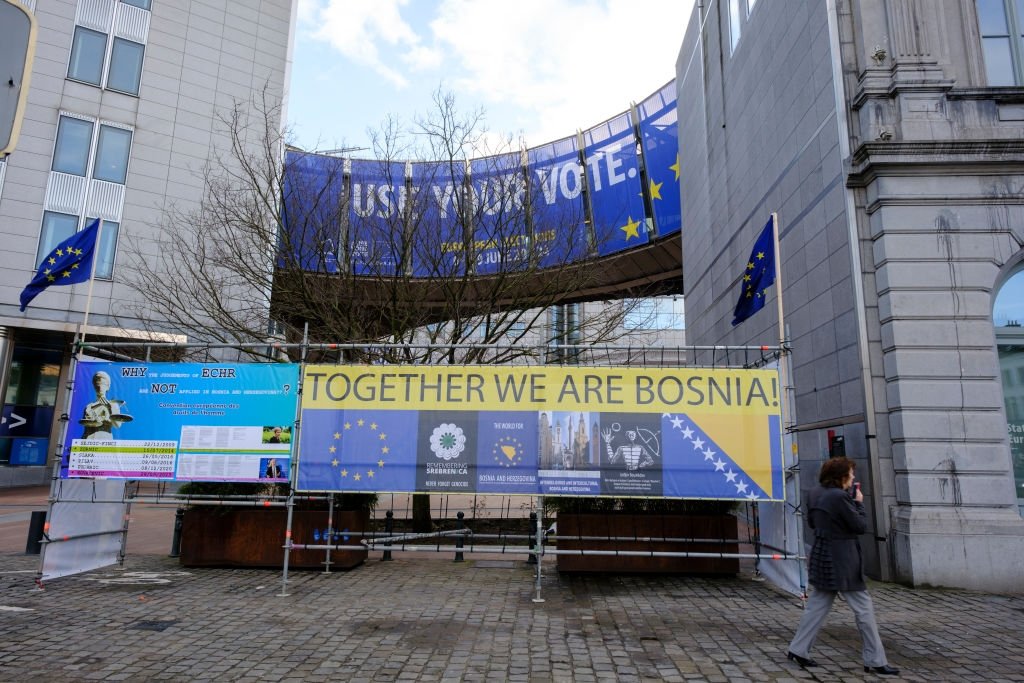
Bosnia depends on its diaspora, but fails to listen to its calls
Summarized and contextualized by DistantNews.
At a glance
News
Sources not specified
Context piece
- Bosnia and Herzegovina faces low voter registration numbers from its diaspora ahead of the Oct. 4 elections.
- Only 7,779 diaspora members met requirements to vote, with 1,037 applications rejected due to incomplete or invalid documentation.
- Experts cite the need for re-registration before each election and a lack of engagement from political parties as reasons for the low turnout.
As Bosnia-Herzegovina prepares for its parliamentary and presidential elections on October 4, a concerningly low number of citizens living abroad have registered to vote. The Central Election Commission (CIK) reported that out of 11,379 diaspora members who accessed the e-Izbori platform, only 7,779 met the requirements, with an additional 1,037 applications still under review. Notably, 9.11% of submitted applications were rejected due to missing documents, invalid identification, or lack of proof of residence.
Germany led registration with 2,300 applications, followed by Croatia (2,212), Austria (1,223), and Serbia (557). These figures are disappointing given Bosnia's estimated diaspora of over 2 million people. CIK Chairperson Suad Arnautovic expressed concern, emphasizing that while the commission manages the process, political parties and state institutions must also address why so few citizens abroad are being reached.
Every time it's the same story. We have to scan and upload documents. Many older people cannot do that on their own. I simply do not understand why our country cannot create a system where I register once and remain on the electoral roll permanently.
Arnautovic stated that the election commission can explain voting procedures, but political parties should motivate citizens to participate. This highlights a critical question: why are so few Bosnians abroad registering for elections that will shape their homeland's future? A significant barrier is Bosnia's requirement for overseas voters to re-register for every election, unlike systems in many Western democracies where registration is permanent. This often surprises citizens, who learn about the deadline shortly before it passes.
Hamid Uzunovic, a 73-year-old who has voted from Germany for years, expressed frustration with the recurring need to scan and upload documents. He questioned why Bosnia cannot implement a permanent registration system, stating that the issue is not a lack of interest but the unnecessary complexity of the voting process. This bureaucratic hurdle disproportionately affects older citizens who may struggle with digital submissions.
The election commission can explain how to vote, he says, but political parties must explain why citizens should vote.
DistantNews Editorial
Originally published by Daily Sabah. Summarized and contextualized by our editorial team with added local perspective. Read our editorial standards.
More Stories



From Our Blog

What Gets Lost (and Found) When News Is Translated

The Critical Role of Diaspora Media in Global News

What Travellers Should Know About Countries with Restricted Press

A Digital Nomad's Guide to Following Local News

How the Same Story Looks Different in Different Countries
