

Brazil warns of U.S. military risk after terror designation for criminal gangs
Translated from Spanish, summarized and contextualized by DistantNews.
At a glance
News
Named sources
New plan
- Brazil's Foreign Ministry warns of a "risk of U.S. military force" in its territory following Washington's designation of Brazilian criminal groups PCC and CV as terrorist organizations.
- President Lula da Silva opposes the designation, which Brazil fears could justify extraterritorial actions by U.S. security forces against the groups' leaders worldwide.
- The U.S. designated the groups, which originated in Brazilian prisons and control drug trafficking in favelas, as terrorist organizations in May, citing their "illicit networks" extending beyond Brazil's borders.
Brazil's Ministry of Foreign Affairs has expressed concern over a "risk of U.S. military force" operating within its territory, following Washington's decision to designate the Brazilian criminal factions PCC (Primeiro Comando da Capital) and CV (Comando Vermelho) as terrorist organizations. President Luiz Inácio Lula da Silva's administration opposes this classification.
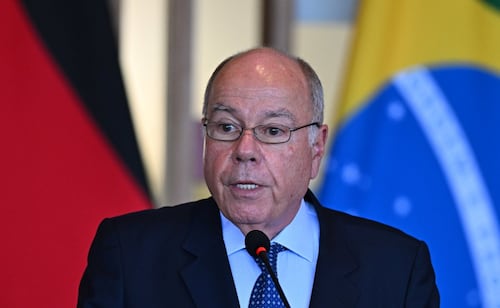
Foreign Minister Mauro Vieira stated in a letter to parliament, obtained by AFP, that the "unilateral classification could be invoked as justification for extraterritorial actions against Brazilian institutions." He added, "There is a risk of the use of U.S. military force against national territory."
That unilateral classification could be invoked as justification for extraterritorial actions against Brazilian institutions.
The U.S. began designating criminal organizations as terrorists under the Trump administration, including Mexican cartels and Venezuela's Tren de Aragua. Washington has conducted lethal strikes against the Tren de Aragua in Venezuela and against suspected drug traffickers' boats in the Caribbean and Pacific. These operations are part of a broader U.S. military campaign against alleged drug traffickers in Latin America.
In May, the U.S. government argued that PCC and CV possess "illicit networks" that "extend far beyond the borders of Brazil." Both groups, which originated in Brazilian prisons, are known to control drug trafficking and other illegal activities within Brazil's favelas. While countries like Mexico and Brazil have voiced opposition, others in Latin America, such as Ecuador and Honduras, reportedly support following the U.S. designation. Brazil's right-wing opposition, led by presidential hopeful Flávio Bolsonaro, has praised Washington's decision, accusing the current government of being lenient on crime.
There is a risk of the use of U.S. military force against national territory.
DistantNews Editorial
Originally published by El Universal in Spanish. Translated, summarized, and contextualized by our editorial team with added local perspective. Read our editorial standards.
More Stories
From Our Blog

What Press Freedom Means for the News You Read

What Gets Lost (and Found) When News Is Translated

The Critical Role of Diaspora Media in Global News

What Travellers Should Know About Countries with Restricted Press

A Digital Nomad's Guide to Following Local News
