


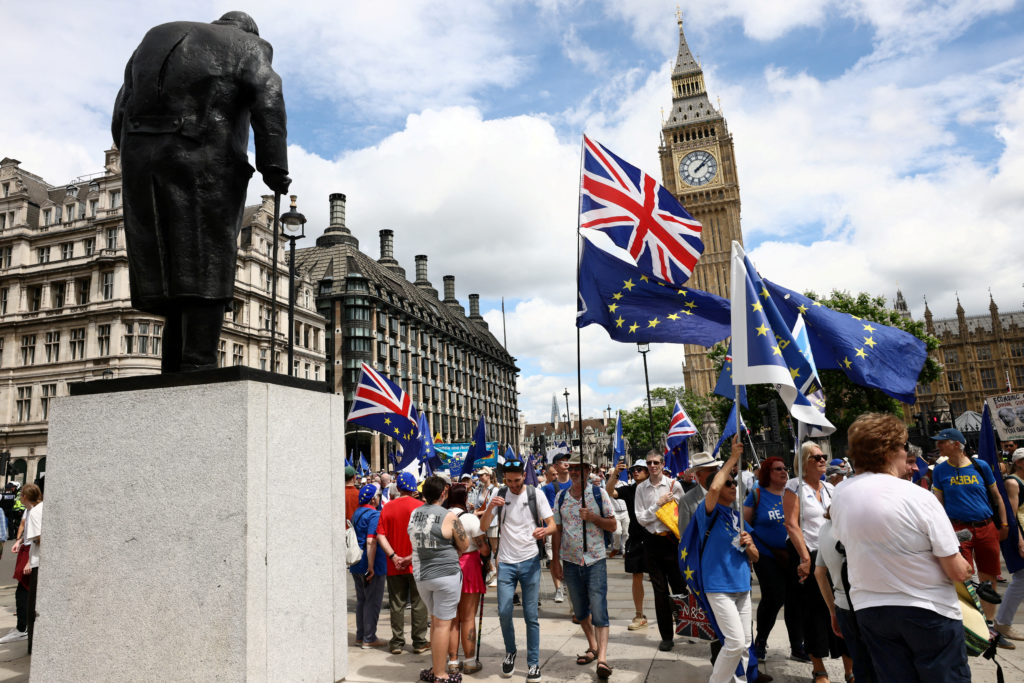
Brexit's divisive legacy lingers 10 years on
Translated from English, summarized and contextualized by DistantNews.
At a glance
News
From a news agency
Context piece
- Ten years after the UK voted to leave the European Union, Brexit continues to divide the nation and reshape its economy and society.
- The decision, made in a 2016 referendum, took nearly five years to finalize and has led to significant economic disruption, contrary to proponents' revitalization claims.
- Experts estimate the UK economy is 4% to 8% smaller than it would have been had the country remained in the EU, with non-tariff barriers impacting trade with the bloc.
A decade after the United Kingdom voted to leave the European Union, the legacy of Brexit continues to profoundly divide the nation and fundamentally alter its economic and social landscape.
The referendum on June 23, 2016, saw 52% of voters choose to exit the EU, a decision that initiated the most significant shake-up of the UK's economy and society since World War II. The process of disentanglement, akin to a divorce, took nearly five years to complete.
Brexit emerged from a backdrop of frustration with the EU and the global financial crisis of 2008. Supporters argued that an independent UK could be revitalized and focus on domestic priorities. However, opponents warned of economic disruption and a diminished global standing. Ten years on, the economic reality has proven harsh for many.
Proponents, or "Brexiters," envisioned a thriving British economy outside the EU, fueled by a "buccaneering spirit." While external factors like the COVID-19 pandemic and international conflicts have played a role, the UK economy has not seen the promised revitalization. Merchants report increased hurdles in trading with the EU, the UK's largest trading partner, facing cumbersome customs paperwork, border certifications, and visa restrictions, despite the absence of tariffs on British goods entering the EU.
Many promised trade deals, particularly with the United States, have not materialized. Experts suggest the British economy is now between 4% and 8% smaller than it would have been had the UK remained in the EU. This translates to lower living standards and less funding for public services like the National Health Service, which was promised an additional 350 million pounds weekly by Brexit campaigners. Professor Jonathan Portes of King's College London notes that Brexit has imposed a "gradual and cumulative drag on trade, investment and productivity," rather than a sudden collapse. Brexiters maintain that the long-term benefits of greater policy control outweigh short-term economic disruption.
Brexit has made the U.K. economy smaller than it otherwise would have been. The effect has not been a sudden collapse, but a gradual and cumulative drag on trade, investment and productivity.
DistantNews Editorial
Originally published by PBS NewsHour in English. Translated, summarized, and contextualized by our editorial team with added local perspective. Read our editorial standards.
More Stories


From Our Blog

How the Same Story Looks Different in Different Countries

What Gets Lost (and Found) When News Is Translated

The Critical Role of Diaspora Media in Global News

What Travellers Should Know About Countries with Restricted Press

A Digital Nomad's Guide to Following Local News
